How to Create a Fasting Plan That Fits a Real Workday

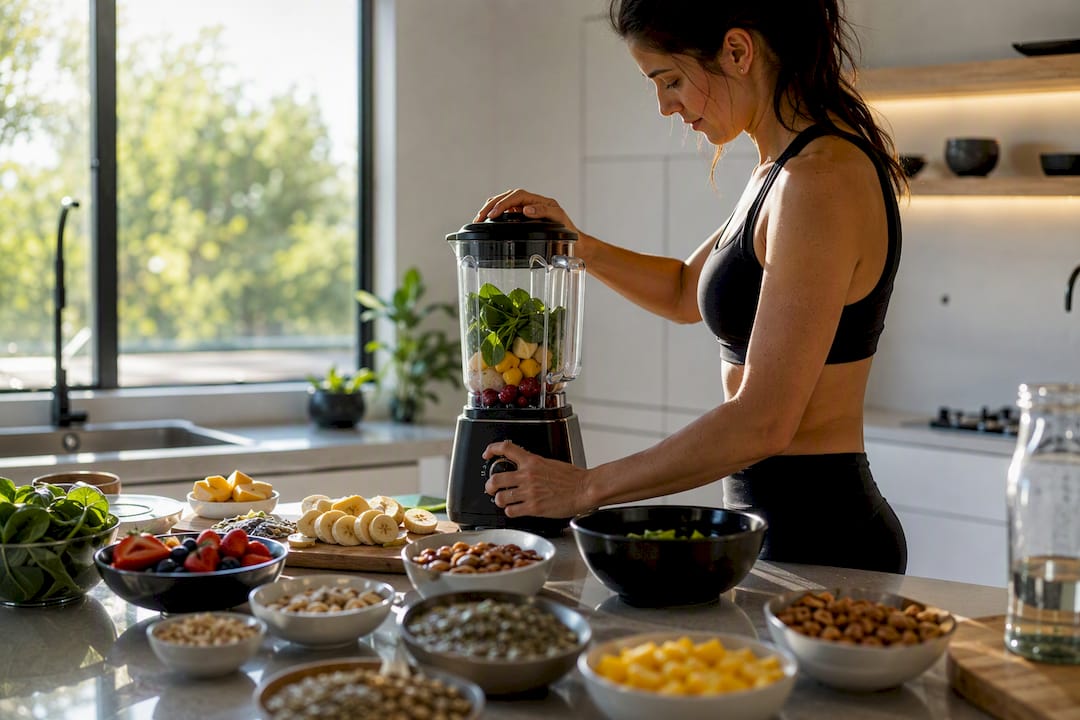
Start with a 14:10 or 16:8 fasting window, anchored to whichever meal you refuse to skip. That’s the whole plan in one sentence. Everything else is detail.
Here are your three moves for this week:
Pick your anchor. If dinner with your family is non-negotiable, eat between noon and 8 PM. If lunch meetings run your day, shift the window earlier.
Run it for 7 to 14 days before you touch anything. Track hunger, focus, and sleep each night in one sentence.
Drink water, black coffee, or plain tea during the fast. Skip anything with calories or artificial sweeteners that might spike cravings.
If you’re pregnant, have a history of disordered eating, take insulin, or manage a chronic condition, talk to a doctor before restricting your eating window at all.
Key Takeaways
The most sustainable fasting plan anchors an eating window to a fixed daily commitment and gets a 7 to 14 day trial before any changes.
Point | Details |
Start with 14:10 or 16:8 | These windows overlap heavily with sleep, making them easiest for beginners to adopt. |
Anchor to a fixed meal | Build your window around dinner or lunch, whichever you can’t skip or move. |
Test for 7 to 14 days | Judge energy, focus, and sleep only after the adaptation period, not on day three. |
Eat protein first | Every meal inside the window should start with protein to blunt blood sugar swings and curb bingeing. |
Use ForgeFast for structure | ForgeFast turns these templates into daily reminders, tracking, and coaching for long-term adherence. |
Table of Contents
How Do You Create a Fasting Plan That Actually Fits Your Life?
The schedule that works is the one you can repeat on a normal Tuesday, not the one that sounds most impressive on paper. That’s not a cop-out. It’s the single biggest predictor of whether intermittent fasting sticks past week three.
Here’s the lineup of common schedules and who each one tends to suit:
12:12 — 12 hours fasting, 12 eating. Best for total beginners easing off late-night snacking.
14:10 — A gentle step up. Good for people who want results without feeling deprived.
16:8 — The most researched time-restricted eating pattern and a solid starting point for most healthy adults, according to the Cleveland Clinic.
18:6 — For those who’ve done 16:8 for a while and want a bigger metabolic push.
20:4 (OMAD-adjacent) — One large eating window, often just one real meal. Suited to experienced fasters, not beginners.
5:2 — Two non-consecutive days of calorie restriction, five days of normal eating. Works well for people who hate daily rules but can handle two hard days a week.
The overlooked fact: most of a 16-hour fast happens while you’re asleep. That’s why 16:8 works for beginners without feeling like punishment. Pick the schedule you’ll actually repeat, not the one with the most dramatic ratio.
How Do You Anchor Your Eating Window to a Normal Workday?
Before picking start and end times, map three things: when you wake up, when you actually fall asleep, and which meal is socially or logistically fixed. That third one matters more than people think. If you skip it, you’ll build a plan you abandon the first time a coworker suggests lunch.
Standard 9-to-5 professionals usually do best with a noon to 8 PM window, since it protects family dinner and skips a rushed breakfast. Early commuters who need fuel before a 6 AM train often shift to 10 AM to 8 PM instead. Medical News Today notes that aligning the window with your actual daily rhythm, not a generic template, is what makes time-restricted eating sustainable for working adults.
Work pattern | Suggested window | Why it fits |
Standard 9–5 | 12 PM to 8 PM | Protects dinner, skips a rushed morning meal |
Early commute | 10 AM to 8 PM | Allows light fuel before an early start |
Heavy meeting load, late dinners | 1 PM to 9 PM | Keeps energy up through afternoon calls |
Night shift | Aligned to your “day,” not the clock | Eating window follows wake time, not sunrise |
A few rules keep this from becoming rigid. Let the window slide by an hour on rough days instead of quitting. On weekends, aim for a 12-hour minimum fast rather than matching your weekday window exactly. And if one day goes sideways, that’s a data point, not a failure.
How Long Should You Test a New Fasting Schedule Before Changing It?
Give any new window at least a week before deciding it doesn’t work. A 10-day adaptation period is commonly cited as the minimum time needed to fairly judge whether a fasting schedule affects your energy and focus, because the first few days of any new eating pattern involve hunger hormone recalibration that has nothing to do with the schedule’s long-term fit.
Here’s what to track each evening, in under a minute:
Hunger level on a simple 1 to 5 scale, noted at the same time each day.
Energy and focus, especially during your typical afternoon slump.
Sleep quality, since poorly timed eating windows often show up as restless nights before anything else.
Mood, because irritability by day three is normal; irritability by day twelve is a signal to adjust.
Weight trend, checked weekly, not daily, since day-to-day fluctuation is mostly water.
A sticky note on your monitor or a single recurring calendar reminder does the job. You don’t need a spreadsheet for this.
Pro Tip: Write your nightly check-in as one sentence, not a paragraph. “Hungry by 3, slept fine, mood good” takes ten seconds and you’ll actually keep doing it.
What Should You Eat When Your Window Opens?
Timing gets you into the eating window. What’s on the plate determines whether you feel good once you’re there. Every meal should start with a protein source, since protein and fiber blunt the blood sugar swing that often triggers overeating right after a fast ends.
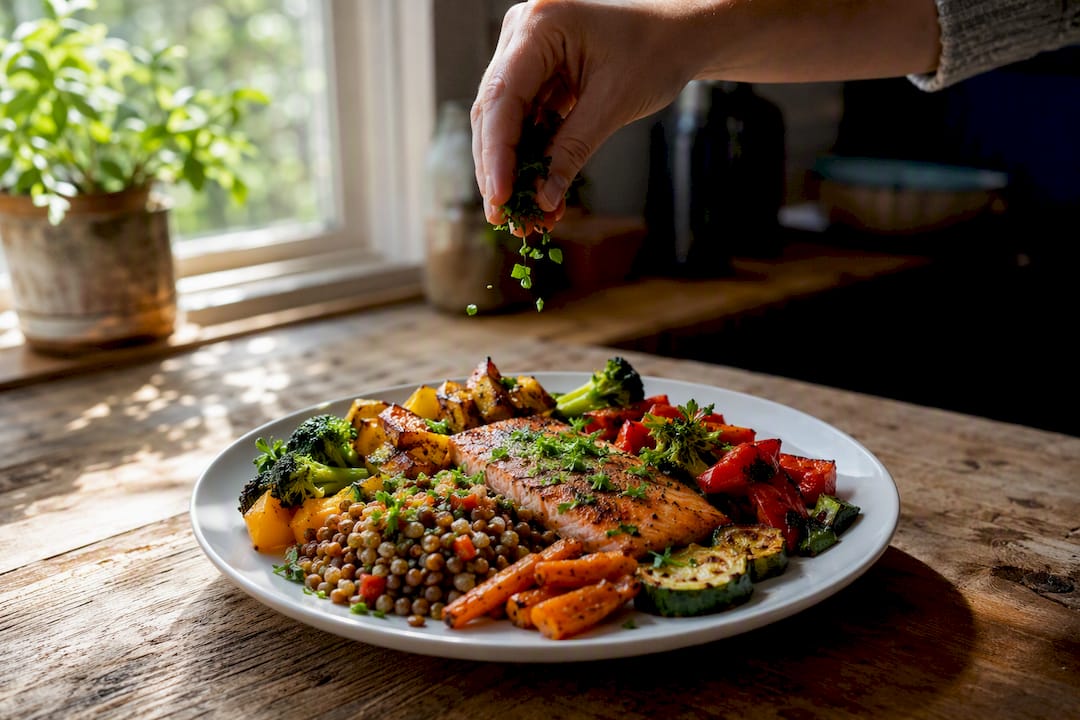
For a straightforward two-meal template, lunch might be grilled chicken, a big pile of roasted vegetables, and rice or potatoes depending on how active your afternoon looks. Dinner follows the same logic: fish or beef, a green vegetable, and a smaller carb portion if you trained that day.
If your window runs long, a two-meal-plus-snack setup works better than forcing a third full meal:
Lunch: protein plus vegetables plus a moderate carb.
Afternoon snack: Greek yogurt, cottage cheese, or a handful of nuts.
Dinner: protein plus vegetables, lighter on carbs if the day was sedentary.
For office meal prep, keep it boring on purpose. Rotate two or three proteins for the week, two carb bases like rice and potatoes, a bag of frozen vegetables you never have to think about, and one sauce you actually like. That system removes the decision fatigue that kills most eating plans by week two.
What Do You Do About Headaches, Bingeing, or Bad Sleep?
Most fasting problems trace back to one of three fixable causes. Headaches and dizziness in the first few days are usually dehydration or low sodium, not a sign the schedule is wrong for you. Add a pinch of salt to your water or drink an electrolyte packet, and taper caffeine gradually instead of quitting cold on day one.

Evening bingeing almost always means the eating window opened without a plan. The fix: front-load protein at your first meal, schedule a snack instead of hoping willpower shows up at 4 PM, and shift dinner earlier so you’re not white-knuckling hunger at 9 PM. Cutting liquid calories, sodas, juices, alcohol, helps more than people expect, since these show up as blood sugar swings that mimic hunger.
Stop and check with a doctor if you’re pregnant or breastfeeding, have a history of an eating disorder, take insulin or other glucose-lowering medication, or notice new symptoms that don’t resolve within a few days of adjusting hydration and timing.
Why Trust a Structured, Habit-First Approach to Fasting?
ForgeFast built its protocols around the same principle this article leads with: a schedule you’ll repeat beats one that’s theoretically perfect. That shows up in a few concrete ways:
Structured fasting windows mapped to real work schedules, not generic templates.
Habit-tracking tools that turn the nightly check-in into a repeatable routine instead of a one-off effort.
Meal-prep and scheduling guides built for professionals juggling meetings, commutes, and family dinners.
Author Tony Lindsay grounded these recommendations in the same clinical sources cited throughout this piece, from Johns Hopkins Medicine to Cleveland Clinic, rather than trend-driven advice.
The Conventional Fasting Advice Gets the Order of Operations Backward
Most fasting content leads with optimization: which window burns the most fat, which protocol triggers the most autophagy, which schedule the biology sounds most impressive on paper. That’s backward. The research on adaptation periods and adherence points to a simpler truth: a mediocre schedule you repeat for six months beats a perfect one you abandon after nine days.
The overrated variable is precision. Nobody needs to nail their eating window to the minute. The underrated variable is anchoring, building the fast around a meeting, a school pickup, or a family dinner that isn’t moving no matter what your macros say.
If you take one thing from this article, prioritize the 7 to 14 day test before anything else. Don’t switch schedules because day three felt hard. Day three always feels hard. Judge the plan on day ten, when your hunger hormones have actually caught up, and adjust from there instead of guessing upfront.
How ForgeFast Helps You Stick With the Plan You Just Built
Knowing the schedule is one thing. Sticking with it on a Wednesday when your calendar falls apart is another. ForgeFast closes that gap with structured protocols, daily habit tracking, and coaching built around the psychology of consistency, not just the mechanics of when to eat.

The app takes the templates in this article, noon to 8 PM windows, two-meal structures, 7 to 14 day testing cycles, and turns them into daily prompts so you’re not relying on memory or willpower alone. It adds reminders when your window opens and closes, a nightly check-in built for the exact tracking this article recommends, and educational content on meal timing and metabolic health you can lean on when motivation dips. If you want a fasting routine that survives a bad week instead of falling apart during one, start with ForgeFast and see the structured challenge for yourself.
Frequently Asked Questions
What is the easiest fasting schedule to start with? Most healthy adults do best starting with 14:10 or 16:8, since the bulk of the fasting hours happen overnight while you’re asleep, according to the Cleveland Clinic.
How long should I try a fasting schedule before switching? Give it 7 to 14 days minimum. A shorter trial mostly measures your body adjusting to a new routine, not whether the schedule actually fits your life.
Can I create a fasting plan around night shift work? Yes. Anchor the window to your personal wake and sleep cycle rather than the clock on the wall, keeping the same 12 to 16 hour fasting structure shifted to match your actual “day.”
What should I drink during the fasting window? Water, black coffee, and plain tea are the safest choices. Anything with calories or artificial sweeteners can trigger cravings that undermine the fast.
Is intermittent fasting safe for everyone? No. People who are pregnant or breastfeeding, have a history of disordered eating, take insulin, or manage chronic conditions should talk to a doctor before starting, since fasting can interact with medication and blood sugar regulation, per Johns Hopkins Medicine.
This article is general information, not a substitute for advice from a qualified doctor. Consult a qualified healthcare professional about your own circumstances before acting on anything here.
Sources
Recommended
Comments