Electrolytes and Fasted Workouts: Your 16:8 Guide

The role of electrolytes in a fasted workout is to maintain nerve function, muscle contraction, and fluid balance when your body has no food-derived minerals to draw from. The 16:8 fasting method, a time-restricted eating schedule where you fast for 16 hours and eat within an 8-hour window, creates a specific physiological state that makes electrolyte management non-negotiable. During the fasting window, liver glycogen depletes after roughly 12 hours, shifting your metabolism toward fat oxidation. That metabolic switch is the goal. But without sodium, potassium, and magnesium on board, your performance and recovery suffer before fat burning ever becomes an advantage.
What is the role of electrolytes in a fasted workout?
Electrolytes are minerals that carry an electrical charge and regulate nearly every physical process that matters during exercise. Sodium controls fluid retention and blood pressure. Potassium drives muscle contractions. Magnesium supports energy production at the cellular level. When you train fasted under a 16:8 diet plan, your body has already been without food for 12 or more hours. Insulin is low, which causes your kidneys to excrete more sodium. That sodium loss pulls water and other electrolytes with it.
The result is a compounding deficit. You lose electrolytes through urine during the fast, then lose more through sweat during training. Without replenishment, you get muscle cramps, early fatigue, and reduced power output. These are not signs of weakness. They are predictable physiological responses to mineral depletion.
The fix is straightforward. Consuming a zero-calorie electrolyte supplement, specifically one with sodium, potassium, and magnesium but no sugar or artificial sweeteners, before or during a fasted workout replaces what the fast and sweat strip away. Only zero-calorie drinks like water, black coffee, and unsweetened tea are permitted during the fasting window. A sugar-free electrolyte powder dissolved in water fits that rule and keeps your fast intact.

Pro Tip: Choose an electrolyte product with at least 500mg of sodium per serving for fasted training sessions longer than 45 minutes. Most standard sports drinks contain sugar and will break your fast.
How does 16:8 fasting work metabolically?
The 16:8 fasting method works by extending the overnight fast long enough to deplete liver glycogen and force a metabolic switch. Dr. Mark Mattson explains that benefits stem from this metabolic switching after glucose runs out. The body shifts from burning sugar to burning fat, producing ketone bodies as a secondary fuel source. That process begins around the 12-hour mark, meaning the final 4 hours of a 16-hour fast are when fat oxidation accelerates.
During the fasting window, permissible beverages include:
Water, still or sparkling, with no additives
Black coffee with no milk, cream, or sweeteners
Unsweetened herbal or green tea
Zero-calorie electrolyte drinks with no sugar or artificial sweeteners
The eating window is flexible. A common 16:8 fasting schedule runs from noon to 8:00 PM, but a 10:00 AM to 6:00 PM window works equally well. What matters is consistency, not the specific hours.
Hunger adaptation takes time. Morning hunger sensations typically subside within 2–3 weeks as the body adjusts its ghrelin rhythm. Ghrelin is the hormone that triggers hunger, and it follows a learned schedule. Once your body learns that food does not arrive in the morning, ghrelin production shifts accordingly.
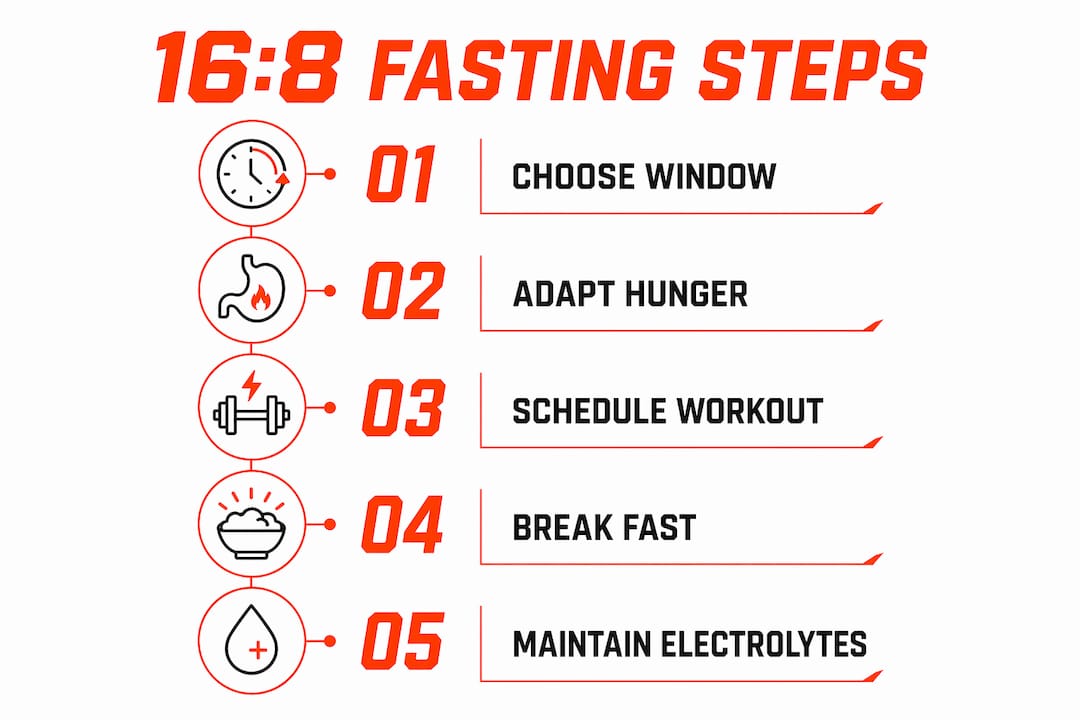
Pro Tip: Schedule your fasted workout in the final 1–2 hours of the fasting window. You train fasted, then break your fast immediately after with a protein-rich meal, which supports both fat burning and recovery.
Who should avoid or modify the 16:8 fasting method?
The 16:8 fasting method is not appropriate for everyone. Certain health conditions make extended fasting genuinely risky, not just uncomfortable. People with type 1 diabetes, eating disorders, or very low muscle mass should avoid 16:8 fasting or attempt it only under direct medical supervision.
Specific groups who need medical clearance before starting:
People managing type 1 or insulin-dependent type 2 diabetes
Anyone with a history of anorexia, bulimia, or binge eating disorder
Individuals with very low body weight or sarcopenia
Pregnant or breastfeeding women
People on medications that require food for absorption
Side effects in the first 1–2 weeks can include headaches, irritability, lightheadedness, and difficulty concentrating. These symptoms are largely driven by electrolyte loss and low blood sugar, not by the fasting itself being harmful. Adequate hydration and electrolyte intake resolve most of them. If symptoms persist beyond two weeks or worsen, stopping and consulting a physician is the right call.
For healthy beginners, a gradual protocol reduces early dropout significantly. Starting at a 12:12 schedule, then moving to 14:10, then reaching 16:8 over three weeks gives the body time to adapt without the shock of an abrupt 16-hour fast.
What are the practical steps to start 16:8 fasting?
The most effective way to begin the 16:8 fasting method is through the LBE ramp-up protocol: Lengthen, Build, Establish. Gradual ramp-up protocols reduce ghrelin spikes that cause early failure. The three-week structure looks like this:
Week 1 (Lengthen): Fast for 12 hours. Eat between 8:00 AM and 8:00 PM. This likely matches your current pattern with minor adjustments.
Week 2 (Build): Extend to 14 hours. Push breakfast to 10:00 AM and keep dinner at 8:00 PM.
Week 3 (Establish): Reach the full 16:8 window. Eat between noon and 8:00 PM, or your preferred 8-hour block.
Meal composition during the eating window matters as much as timing. Protein intake of 0.7–1.0 grams per pound of body weight preserves muscle mass during fasting. Resistance training reinforces this effect. Without adequate protein and strength work, the body can break down muscle tissue for fuel, which drops your metabolic rate over time.
Behavioral anchors also matter. Brushing your teeth at the end of the eating window signals to your brain that eating is finished for the day. This simple routine reduces late-night snacking more reliably than willpower alone. Pair it with a consistent bedtime, and the fasting window becomes automatic rather than effortful.
For people with demanding schedules, fasting schedules for busy professionals show how to align eating windows with work demands without sacrificing adherence.
How does 16:8 fasting compare to other fasting methods?
The 16:8 fasting method sits in the middle of the intermittent fasting spectrum. Understanding where it fits helps you choose the right protocol for your goals and lifestyle.
Protocol | Fasting window | Best suited for | Key trade-off |
12:12 | 12 hours | Beginners, maintenance | Minimal metabolic switching |
14:10 | 14 hours | Transition phase | Moderate fat oxidation |
16:8 | 16 hours | Fat loss, metabolic health | Requires consistent scheduling |
18:6 | 18 hours | Advanced practitioners | Higher adherence difficulty |
The critical nuance: weight loss from 16:8 fasting derives mainly from passive calorie reduction through a compressed eating window, not from fasting itself being metabolically superior. Meta-analyses confirm that when total calories are matched, 16:8 fasting does not outperform standard calorie restriction for weight loss. The advantage is behavioral. A shorter eating window eliminates snacking opportunities and reduces total intake without requiring calorie counting.
Intermittent fasting is not a magic pill for weight loss. Consistency and overall calorie control drive results. The 16:8 structure makes both easier to maintain.
Tips for maximizing 16:8 fasting results and avoiding pitfalls
The most common reason people fail at 16:8 fasting is starting too aggressively. Jumping straight into a 16-hour fast causes ghrelin spikes that feel like intense hunger, triggering early abandonment. The gradual ramp-up approach solves this before it becomes a problem.
Beyond the ramp-up, these practices separate people who see results from those who quit:
Hydrate early. Drink 16–20 oz of water within 30 minutes of waking. Dehydration amplifies hunger and fatigue during the fast.
Prioritize electrolytes. Sodium, potassium, and magnesium are the first minerals to drop during fasting. Replace them before training, not after.
Eat micronutrient-dense foods. A shorter eating window means fewer meals to cover your vitamin and mineral needs. Prioritize vegetables, legumes, and whole grains over processed foods.
Avoid compensatory overeating. Breaking a fast with a large, high-calorie meal eliminates the calorie deficit the fast created. Eat a normal-sized meal, not a reward meal.
Track common mistakes. Reviewing intermittent fasting mistakes that derail progress helps you course-correct before habits solidify.
Pro Tip: Fasting is not a restrictive diet. It is a schedule. Framing it that way removes the psychological burden and makes long-term adherence far more likely.
Key Takeaways
Electrolyte management and a structured ramp-up protocol are the two factors that most determine whether 16:8 fasting delivers results or causes early dropout.
Point | Details |
Electrolytes are non-negotiable | Sodium, potassium, and magnesium must be replenished during fasted training to prevent cramps and fatigue. |
Metabolic switching starts at 12 hours | Fat oxidation accelerates in the final 4 hours of a 16-hour fast, making the full window worth completing. |
Ramp up gradually | The LBE protocol (12:12 to 14:10 to 16:8 over 3 weeks) reduces ghrelin spikes and improves adherence. |
Protein intake preserves muscle | Consuming 0.7–1.0 grams of protein per pound of body weight during the eating window prevents muscle loss. |
Fasting works through calorie reduction | Weight loss benefits come from a compressed eating window reducing total intake, not from fasting being metabolically magic. |
Why I think most people approach 16:8 fasting backwards
Most people who try 16:8 fasting focus entirely on the clock and ignore everything that happens inside the fasting window. They obsess over when to eat and forget that what they drink, how they train, and how they manage electrolytes during those 16 hours determines whether the method actually works.
I have seen this pattern repeatedly. Someone commits to a noon-to-8:00 PM eating window, trains fasted at 10:00 AM, and wonders why they feel terrible by week two. The answer is almost always electrolytes. They are drinking plain water, losing sodium through sweat, and experiencing the predictable consequences: cramps, brain fog, and the kind of fatigue that makes fasting feel punishing rather than productive.
The second mistake is treating 16:8 as a diet rather than a schedule. A diet implies restriction and deprivation. A schedule implies structure and routine. The moment you reframe fasting as a daily structure rather than a food rule, adherence becomes dramatically easier. You are not denying yourself food. You are simply deciding when food fits into your day.
The third thing I would tell anyone starting out: do not skip the ramp-up. Three weeks of gradual extension feels slow. But the people who skip it and go straight to 16 hours are the same people who quit by week three. Patience in the setup phase pays off in months of consistent results.
— Tony Lindsay
ForgeFast and the 16:8 method: what structured support looks like
Knowing the science behind 16:8 fasting is one thing. Applying it consistently across weeks and months is where most people need support.

ForgeFast builds its intermittent fasting method around exactly this gap. The framework integrates the biological science of metabolic switching with the psychological structure needed to make fasting a permanent habit rather than a temporary experiment. The ForgeFast app tracks your fasting windows, flags common adherence errors, and keeps your schedule consistent even when life gets complicated. For anyone serious about using 16:8 fasting to improve metabolic health, manage weight, and build lasting habits, ForgeFast provides the structure that turns good intentions into measurable results.
FAQ
What electrolytes should I take during a fasted workout?
Sodium, potassium, and magnesium are the three electrolytes most depleted during fasted training. Use a zero-calorie electrolyte supplement with no sugar to stay within the fasting window.
Does drinking electrolytes break a 16:8 fast?
A sugar-free, zero-calorie electrolyte drink does not break a fast. Drinks with sugar, artificial sweeteners, or calories end the fasted state and reduce the metabolic benefits of the 16:8 schedule.
How long does it take to adapt to 16:8 fasting?
Morning hunger typically subsides within 2–3 weeks as ghrelin adjusts to the new eating schedule. Using a gradual ramp-up from 12:12 to 16:8 shortens the adaptation period.
Can I work out fasted every day on a 16:8 plan?
Daily fasted training is sustainable for most healthy adults when electrolytes are maintained and the post-workout meal is protein-rich. Recovery quality depends on what you eat after training, not just when you train.
Is 16:8 fasting effective for weight loss?
Yes, but the mechanism is behavioral rather than metabolic. A compressed eating window reduces total calorie intake passively. When calories are matched to a standard diet, 16:8 fasting produces comparable but not superior weight loss results.
Recommended
Comments