Fasting Without Extreme Food Rules: A Flexible Guide


Fasting without extreme food rules is a flexible eating pattern that focuses on when you eat rather than imposing harsh restrictions on what you consume. The industry term for this approach is time-restricted eating, a subset of intermittent fasting that has gained serious traction among researchers and practitioners alike. Methods like the 16:8 protocol, the 5:2 diet, and the 12:12 schedule all share one defining trait: they work with your schedule and your biology, not against your sanity. For busy individuals who want improved metabolic health and mental clarity without obsessing over every meal, this approach delivers real results without the psychological cost of rigid dietary rules.
What does fasting without extreme food rules look like in practice?
Flexible fasting is not one fixed protocol. It is a spectrum of schedules that you adapt to your life, not the other way around.
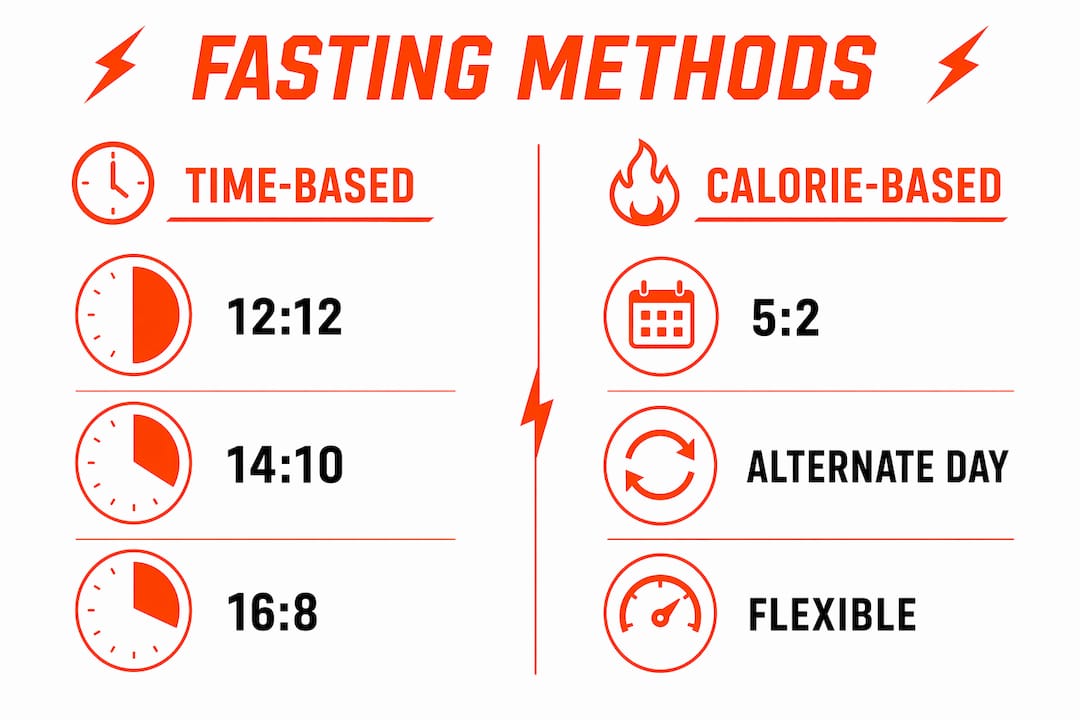
The most accessible starting point is the 12:12 schedule, where you fast for 12 hours and eat within a 12-hour window. Most people already do this without realizing it. From there, medical experts recommend a gradual progression from 12:12 to 14:10, and then to 16:8, which minimizes side effects and builds consistency over time. This stepwise approach matters because it trains your hunger hormones to adapt rather than spike in protest.

The 5:2 method takes a different angle entirely. You eat normally five days a week and limit calories to 400-600 on two nonconsecutive days. This works well for people whose schedules vary week to week, since you can choose which two days to reduce intake based on what is happening in your life.
One persistent myth worth addressing: skipping breakfast is not required. Your eating window can run from 10 a.m. to 6 p.m. or from noon to 8 p.m. depending on your social life, work schedule, and personal preference. The window that you will actually stick to is the right one.
Fasting schedule | Eating window | Calorie restriction | Flexibility level |
12:12 | 12 hours | None | Very high |
14:10 | 10 hours | None | High |
16:8 | 8 hours | None | Moderate |
5:2 | Normal 5 days | 400-600 kcal on 2 days | High |
Pro Tip: If a work dinner or social event falls outside your usual eating window, shift the window that day. One adjustment does not break the protocol. Rigid rules do.
How to integrate healthy eating guidelines within flexible fasting
The eating window is where most people either support or undermine their fasting results. Flexible fasting does not require a perfect diet, but it does reward smart choices.
Nutrient-dense foods that emphasize protein, fiber, and healthy fats sustain energy and stabilize blood sugar between meals. This matters because stable blood sugar reduces the urge to overeat when your window opens, which is the single most common way people accidentally cancel out their fasting benefits. Think grilled salmon with roasted vegetables, a Greek yogurt and berry bowl, or a large salad with eggs and avocado. These are not exotic meals. They are practical, fast to prepare, and genuinely filling.
Avoiding obsessive food rules is just as important as choosing quality foods. Flexible fasting collapses when people layer strict macronutrient targets, elimination diets, and calorie counting on top of their fasting schedule simultaneously. The mental load becomes unsustainable. Pick one lever to pull at a time.
Nutrient-dense foods that support flexible fasting:
Eggs and lean proteins (chicken, fish, legumes)
Leafy greens and cruciferous vegetables (spinach, broccoli, kale)
Healthy fats (avocado, olive oil, nuts, seeds)
High-fiber carbohydrates (oats, sweet potato, lentils)
Fermented foods (Greek yogurt, kimchi, kefir) for gut health
Mindful eating practices during your window also reduce the risk of compensatory overeating, which is when people eat past satiety to “make up” for the fast. Eating slowly, without screens, and stopping at 80% fullness are habits that cost nothing and pay significant dividends.
Pro Tip: Add a tablespoon of MCT oil to your morning coffee or a cup of bone broth mid-fast. Both curb hunger signals without meaningfully disrupting the metabolic state of your fast, making the transition far easier in the first two weeks.
How to start fasting without rigid rules: a step-by-step approach
Starting too aggressively is the most predictable way to quit. Aggressive fasting early on leads to fatigue, irritability, and burnout. A gradual increase in fasting time is both safer and more effective for building the habit.
Week one should look like a 12:12 schedule. You are not trying to lose weight yet. You are training your body to recognize a feeding window and a fasting window. By week three, most people find that hunger in the morning diminishes on its own, because ghrelin (the hunger hormone) adapts to your new pattern within a few days.
Common mistakes to avoid when starting out:
Jumping straight to 16:8 or 18:6 without a ramp-up period
Treating a missed fast as a failure and abandoning the practice entirely
Drinking only water and ignoring electrolytes, which causes headaches and fatigue
Eating large, carbohydrate-heavy meals to “prepare” for the fast
Weighing yourself daily and expecting linear results
Flexible fasting produces sustainable weight loss of about 0.5 to 1 pound per week. That rate is slower than crash diets but far more durable, because you are building a habit rather than surviving a temporary restriction.
Stepwise progression | Common pitfall at each stage |
Week 1: 12:12 schedule | Skipping the ramp-up and starting at 16:8 |
Week 2-3: Move to 14:10 | Overeating at the first meal to compensate |
Week 4+: Extend to 16:8 if comfortable | Abandoning the protocol after one missed day |
Ongoing: Adjust window to lifestyle | Applying rigid rules that ignore schedule changes |
The all-or-nothing mindset is the single biggest threat to long-term success. Missing one day is not a failure. It is data about what needs adjusting.
How do you troubleshoot fasting challenges while staying flexible?
Hunger, fatigue, and schedule disruptions are the three most common reasons people stop fasting. Each has a practical fix that does not require stricter discipline.
Hunger in the first few days is real but temporary. Hunger typically diminishes after the first couple of days as your body adjusts. Bridging that gap with electrolyte drinks (sodium, potassium, magnesium) prevents the headaches and brain fog that most people mistake for hunger. Bone broth is particularly effective because it provides minerals and a small amount of protein that blunts hunger without triggering a full insulin response.
For schedule disruptions, the solution is a pre-decided rule: if something significant comes up (a work trip, a family dinner, a stressful week), you shift your window rather than skip the practice entirely. Flexibility in fasting schedules reduces burnout and improves adherence precisely because it removes the guilt of imperfection.
Practical troubleshooting strategies:
Replace plain water with electrolyte drinks during the fasting window to prevent fatigue
Use energy-focused practices like short meditations or breathing exercises when hunger peaks
Shorten your fast by one to two hours during high-stress weeks rather than abandoning it
Eat your first meal slowly and prioritize protein to prevent overeating
One area that deserves honest attention: fasting is not appropriate for everyone. People with a history of disordered eating, those who are pregnant, or individuals managing certain metabolic conditions should consult a physician before starting any fasting protocol.
“Fasting is a tool for health, not a punishment. Listening to your body and adjusting accordingly is not weakness. It is the practice.”
Flexible fasting in the long term: sustaining results without burning out
The goal of flexible fasting is not to reach a finish line. It is to build a default relationship with food that supports your health without requiring constant willpower.
Eating aligned to circadian rhythms with earlier eating windows can improve insulin sensitivity, but later windows are often more practical and still deliver most of the metabolic benefits. This is a useful permission slip: you do not need to eat at 7 a.m. to make fasting work. A noon-to-8 p.m. window fits most social and professional lives far better, and adherence is what actually drives results.
Personalizing your fasting routine as life changes is not optional. It is the mechanism. A new job, a new baby, a period of high stress, or a travel-heavy month all call for a recalibrated window, not a suspended practice. The ForgeFast Method is built around exactly this principle: structure that bends without breaking.
Long-term practitioners consistently report that the mental clarity benefit compounds over time. The first two weeks are about managing hunger. By month three, most people describe a cleaner relationship with food, fewer cravings, and a noticeable improvement in focus during the fasting window. These outcomes are not incidental. They are the result of metabolic flexibility, the body’s improved ability to switch between burning glucose and burning fat for fuel.
For deeper reading on mastering sustainable fasting habits, the Forgefastmethod blog covers the psychological and biological dimensions of long-term fasting adherence in practical detail.
Key takeaways
Flexible fasting works because it prioritizes timing over restriction, making it sustainable for busy individuals who need a protocol that adapts to real life rather than demanding perfection.
Point | Details |
Start with 12:12 | Begin with a 12-hour fast and progress gradually to avoid burnout and side effects. |
Prioritize nutrient density | Focus on protein, fiber, and healthy fats during eating windows to stabilize energy and reduce overeating. |
Flexibility prevents failure | Shifting your fasting window around life events is the strategy, not a compromise. |
Use fasting aids wisely | Electrolytes, bone broth, and MCT oil ease the transition without breaking the fast’s metabolic benefits. |
Expect slow, steady progress | Sustainable weight loss of 0.5 to 1 pound per week is the realistic and durable outcome. |
Why rigidity is the real enemy of fasting success
I have watched hundreds of people start fasting with genuine motivation and quit within three weeks. Almost none of them quit because fasting did not work. They quit because they built a version of fasting that was impossible to maintain.
The pattern is consistent: someone reads about 16:8, commits to eating only between noon and 8 p.m., has a work lunch on day five that runs until 1 p.m., and decides the whole protocol is broken. That is not a fasting problem. That is a perfectionism problem wearing a fasting costume.
What actually works is treating fasting as a default, not a law. Your default is a 16:8 window. On a normal Tuesday, you follow it. On a Thursday with a client dinner, you shift to a 14:10 or skip the fast entirely and return to default on Friday. The practice is the pattern over months, not the performance on any single day.
The other thing I have noticed is that people who succeed long-term almost never talk about what they cannot eat. They talk about how they feel during the fasting window: sharper, lighter, more in control. That shift in focus, from restriction to function, is what separates people who sustain this for years from people who cycle through protocols every few months. Build the habit of consistency first. The results follow.
— Tony
Start fasting flexibly with the right support
Fasting without extreme food rules is straightforward in principle but easier to sustain with structure behind it. Forgefastmethod is built for exactly this: a flexible fasting method that adapts to your schedule, your social life, and your goals without demanding dietary perfection.

The Forgefastmethod app provides personalized fasting schedules, window adjustments for travel and events, and progress tracking that keeps you consistent without adding stress. If you are ready to build a fasting practice that fits your actual life, the ForgeFast app is the most direct path to getting started. Flexible, guided, and designed for people who have real lives to manage alongside their health goals.
FAQ
What is fasting without extreme food rules?
Fasting without extreme food rules is an approach to intermittent fasting that focuses on when you eat rather than imposing strict restrictions on specific foods. The goal is sustainable timing-based eating that supports health without obsessive dietary rules.
What is the best fasting schedule for beginners?
Medical experts recommend starting with a 12:12 schedule and progressing gradually to 14:10 and then 16:8 to minimize side effects and build consistency. Jumping straight to longer fasts increases the risk of fatigue and early dropout.
Can I eat normally during my eating window?
You can eat without rigid rules, but prioritizing protein, fiber, and healthy fats during your eating window stabilizes blood sugar and reduces the urge to overeat. Compensatory overeating during the eating window is the most common way people undermine their fasting results.
How do I handle hunger during a fast?
Hunger typically diminishes after the first two to three days as your body adapts. Electrolyte drinks, bone broth, and a small amount of MCT oil can blunt hunger signals during the transition without meaningfully disrupting the metabolic benefits of the fast.
Is flexible fasting effective for long-term weight loss?
Flexible intermittent fasting produces sustainable weight loss of approximately 0.5 to 1 pound per week, which is slower than crash diets but far more durable. The key driver of long-term results is adherence, which flexible protocols support better than rigid ones.
Recommended
Comments