Mind-Body Fasting Approach: Benefits and How It Works


The mind-body fasting approach is defined as the deliberate combination of intermittent fasting with mindfulness practices to improve both physical health and emotional well-being. This method goes beyond calorie restriction. It treats fasting as a full-body awareness practice, using techniques like breath awareness, body scans, and gratitude meditation to deepen the experience. Schedules like 16:8 and 12:12 form the structural backbone, while mindfulness provides the mental framework that makes those schedules sustainable. A 2020 study in Nutrients found that pairing intermittent fasting with mindfulness meditation significantly reduces emotional eating in overweight adults. That finding alone separates this approach from every standard diet protocol.
What is the mind-body fasting approach and how does it work?
The mind-body fasting approach, also called mindful fasting or holistic fasting, treats the fasting window as a period of active self-observation, not just food restriction. Standard intermittent fasting tells you when to eat. The mind-body version adds a layer: it asks you to notice why you want to eat, what you feel in your body, and how your emotions shift during the fast.
The physical mechanism starts with metabolic switching. According to Johns Hopkins Medicine, the body shifts from burning glucose to burning fat after 16–24 hours without food, and deeper cellular repair through autophagy begins after 24–36 hours. Mindfulness amplifies this process by training you to distinguish true hunger from boredom, stress, or habit. That distinction is the core skill the mind-body connection fasting builds over time.

Forgefastmethod describes this integration as building resilience in both the body and the mind simultaneously. The fasting window creates a biological signal. The mindfulness practice creates a psychological one. Together, they interrupt the automatic, unconscious eating patterns that undermine most diet attempts.
How does fasting affect your metabolism and body awareness?
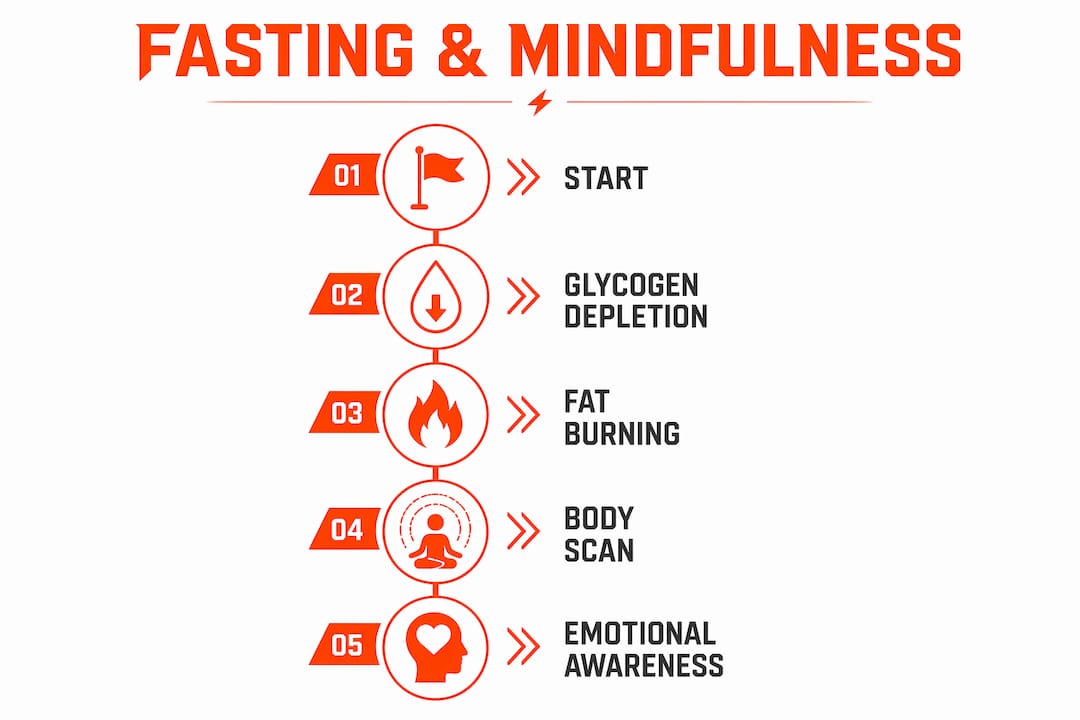
Metabolic switching is the physiological engine behind fasting’s physical benefits. When glycogen stores deplete, the liver begins producing ketones from fat. This shift, which occurs after 16–24 hours of fasting, fuels the brain more efficiently than glucose during extended periods. Autophagy, the cellular cleanup process, deepens after 24–36 hours and is associated with reduced inflammation and improved cellular function.
Mindfulness strengthens body awareness during these metabolic shifts. Practitioners who use breath awareness or body scan techniques during a fast report noticing physical sensations more clearly, including the difference between a hunger pang and a stress response. That awareness prevents reactive eating, which is the single most common reason people break a fast too early.
Fasting Duration | Primary Metabolic Effect | Mindfulness Role |
12–16 hours | Glycogen depletion begins | Breath awareness to manage early hunger |
16–24 hours | Fat burning activates | Body scan to observe energy shifts |
24–36 hours | Autophagy deepens | Gratitude meditation to sustain calm |
Pro Tip: Set a 5-minute body scan alarm at the midpoint of your fasting window. Checking in physically at that moment trains you to separate genuine hunger from habitual craving before it becomes reactive eating.
The psychology of controlled hunger matters here. Recognizing that a craving peaks and passes within 10–15 minutes, without acting on it, builds the same mental discipline that makes long-term fasting sustainable.
What role does mindfulness play in managing cravings and emotions?
Mindfulness during fasting is not a passive add-on. It is the mechanism that prevents fasting from becoming a white-knuckle endurance test. Experts at Mindfulness Top Five describe the synergy clearly: fasting and mindfulness together break “autopilot living” by increasing conscious presence and awareness of bodily signals. Without that awareness, most people eat in response to emotional triggers, not physical hunger.
The techniques best suited to fasting periods include:
Breath awareness: A 5-minute focused breathing session at the start of the fasting window anchors attention and reduces cortisol-driven cravings.
Body scans: A slow mental scan from head to toe identifies where tension or discomfort lives, separating physical hunger from nervous system activation.
Gratitude meditation: Shifting attention to appreciation during a craving interrupts the emotional loop that drives impulsive eating.
Mindful journaling: Writing down what you feel during a craving, rather than acting on it, builds the self-observation habit that sustains the practice.
One of the most useful frameworks in this space comes from Hudur, which describes fasting as a “meditation of the body” and meditation as a “fasting of the mind.” Both practices detach you from compulsive habits. Both require you to sit with discomfort rather than escape it. That parallel structure is why combining them produces results that neither achieves alone.
Pro Tip: When a craving hits during your fasting window, name the emotion driving it out loud or in writing. “I want to eat because I’m anxious” is a complete sentence that creates enough distance to make a conscious choice.
Fasting also acts as an emotional mirror. When food is removed as a buffer, suppressed emotions surface. Recognizing those emotions as progress signals, rather than signs of failure, is the psychological shift that separates practitioners who sustain the practice from those who abandon it.
How do you match fasting schedules with mindfulness practices?
Matching the right fasting window to the right mindfulness practice prevents both metabolic and emotional shock, especially for beginners. The standard progression moves from shorter, gentler windows toward longer, more demanding ones, with mindfulness duration increasing in parallel.
Days 1–2 (12:12 window): Fast for 12 hours, eat within 12. Practice 5 minutes of breath awareness each morning. This stage builds the habit of checking in with the body before eating.
Days 3–4 (14:10 window): Extend the fast by 2 hours. Add a 10-minute body scan at the midpoint of the fasting window. Notice energy levels and emotional tone without judgment.
Days 5–6 (16:8 window): The standard beginner protocol recommends reaching 16:8 by days 5–6 while increasing mindfulness meditation from 5 to 15 minutes daily. This is the window where fat burning activates and mindfulness becomes most valuable.
Week 2 onward: Maintain 16:8 or experiment with alternate-day fasting. Pair longer fasts with 15–20 minutes of gratitude meditation or mindful journaling to sustain emotional stability.
Fasting Schedule | Fasting Window | Recommended Mindfulness Practice | Session Duration |
12:12 | 12 hours | Breath awareness | 5 minutes |
14:10 | 14 hours | Body scan | 10 minutes |
16:8 | 16 hours | Body scan + breath work | 15 minutes |
Alternate-day | 24 hours | Gratitude meditation + journaling | 20 minutes |
For those tracking mindfulness progress alongside fasting, a meditation session tracker helps identify which practices correlate with the strongest fasting adherence. Pairing data from both sides of the practice reveals patterns that pure willpower never would.
How to break a fast mindfully and sustain the practice long-term
Breaking a fast is not the finish line. It is one of the most consequential moments in the entire practice. The re-entry phase requires mindful eating of nutrient-dense, easily digestible foods to avoid digestive distress and honor the body’s current state. Starting with bone broth, a small portion of cooked vegetables, or a handful of nuts gives the digestive system time to reactivate before heavier foods arrive.
Practical guidelines for breaking a fast with awareness:
Eat slowly and without screens. Removing distraction forces attention onto taste, texture, and satiety signals.
Start with small portions. A fist-sized serving of food is enough for the first 20–30 minutes after a longer fast.
Pause between bites. A 30-second pause lets the body register fullness before the next bite arrives.
Notice emotional tone. Are you eating from relief, celebration, or genuine hunger? That distinction matters for the next fast.
Strict fasting protocols that ignore the body’s signals cause extreme stress and undermine long-term adherence. Adapting schedules based on body feedback, rather than rigid rules, is what makes this practice sustainable across months and years. Forgefastmethod builds this flexibility directly into its framework, treating individual variation as a feature, not a flaw.
Pro Tip: Write three sentences in a journal immediately after breaking your fast: what you ate, how you felt physically, and what emotion was present. That 90-second habit builds the self-knowledge that makes every subsequent fast more intentional.
Key takeaways
The mind-body fasting approach works because it combines the metabolic benefits of intermittent fasting with the emotional regulation skills of mindfulness, creating a practice that is more sustainable and more transformative than either method alone.
Point | Details |
Metabolic switching requires 16–24 hours | Fat burning activates after 16–24 hours; mindfulness helps you reach that window without reactive eating. |
Match mindfulness to fasting stage | Begin with 5-minute breath awareness at 12:12 and scale to 20-minute gratitude meditation at 24-hour fasts. |
Cravings are emotional signals | Naming the emotion behind a craving creates enough distance to make a conscious choice instead of breaking the fast. |
Break fasts with intention | Start re-entry with small, easily digestible portions and pause between bites to honor the body’s signals. |
Flexibility sustains the practice | Rigid protocols cause stress; adapting fasting schedules to individual feedback is the key to long-term success. |
Why I think most fasting advice misses the most important half
Most fasting content focuses entirely on the clock. Eat at this time, stop at that time, repeat. That framing treats the fasting window as a waiting room, something to endure until the next meal. After working with this practice for years, I am convinced that framing is exactly why most people quit within the first two weeks.
The emotional dimension of fasting is not a side effect. It is the point. When you remove food as a coping mechanism, even temporarily, you come face to face with the emotional patterns that were hiding behind it. That can feel uncomfortable. It is supposed to. Discomfort is information, not failure.
What I have found is that practitioners who approach fasting with compassion toward themselves, who treat a broken fast as data rather than a moral failure, build far more durable habits than those who follow strict protocols. The mindful fasting approach is not softer than traditional fasting. It is harder in the right ways. It asks you to stay present with discomfort rather than escape it.
Fasting without mindfulness is a diet. Fasting with mindfulness is a practice. The difference shows up not in the first week, but in the sixth month, when the person who built awareness alongside discipline is still going, and the person who relied on willpower alone has moved on to the next protocol.
— Tony
Take your mind-body fasting practice further with Forgefastmethod
Forgefastmethod is built for exactly this kind of practice. The platform integrates fasting scheduling with mindfulness guidance, giving you a structured framework that addresses both the biological and psychological sides of lasting change.

The ForgeFast method combines personalized fasting plans with habit-building tools grounded in psychological research. Whether you are starting with a 12:12 window or ready to push toward alternate-day fasting, the platform adapts to your pace. You can also explore the ForgeFast app for daily fasting tracking, mindfulness prompts, and progress insights that keep the mind-body connection fasting practice consistent and measurable. This is not a generic diet tracker. It is a framework designed for people who want to build resilience, not just lose weight.
FAQ
What is the mind-body fasting approach in simple terms?
The mind-body fasting approach combines intermittent fasting with mindfulness practices like breath awareness and body scans to improve both physical health and emotional regulation. It treats the fasting window as a period of active self-observation, not just food restriction.
How long should I fast to get metabolic benefits?
Fat burning activates after 16–24 hours of fasting, while cellular repair through autophagy deepens after 24–36 hours. Beginners should start with a 12:12 window and progress gradually.
Can mindfulness really reduce cravings during fasting?
Yes. A 2020 study in Nutrients found that pairing intermittent fasting with mindfulness meditation significantly reduces emotional eating. Mindfulness teaches you to distinguish physical hunger from emotional triggers, which is the primary driver of craving-based eating.
What mindfulness practices work best during a fasting window?
Breath awareness, body scans, and gratitude meditation are the three most effective techniques for fasting periods. Each targets a different layer of the experience: breath work reduces cortisol, body scans build physical awareness, and gratitude meditation interrupts emotional eating loops.
How do I break a fast without digestive discomfort?
Start with small portions of nutrient-dense, easily digestible foods like bone broth, cooked vegetables, or nuts. Eat slowly, pause between bites, and avoid screens during the re-entry meal to keep attention on physical satiety signals.
Recommended
soi cầu miền bắc lúc đầu mình hơi ngại vì mấy trang kiểu này hay rối chữ, nhưng vào xem thử thì lại thấy khá dễ theo dõi. Họ để bài theo ngày rất rõ, kiểu “Soi cầu MB ngày 3 9 2026” nằm ngay tiêu đề nên mình lướt xuống là biết đang nói đúng ngày nào, khỏi phải mò. Phần dự đoán cũng chia thành vài khối thông tin ngắn, đọc nhanh là nắm được ý chính, nhất là đoạn “Dự Đoán XSMB 3 9 2026” nhìn nổi bật hẳn (mình chỉ xem cách trình bày chứ không đi sâu). Mình thích nhất là khoảng cách dòng và cách ngắt đoạn vừa mắt, kéo xuống lâu cũng không…