The 16:8 Fasting Method Explained for Real Results
- Tony Lindsay
- Jul 10
- 7 min read


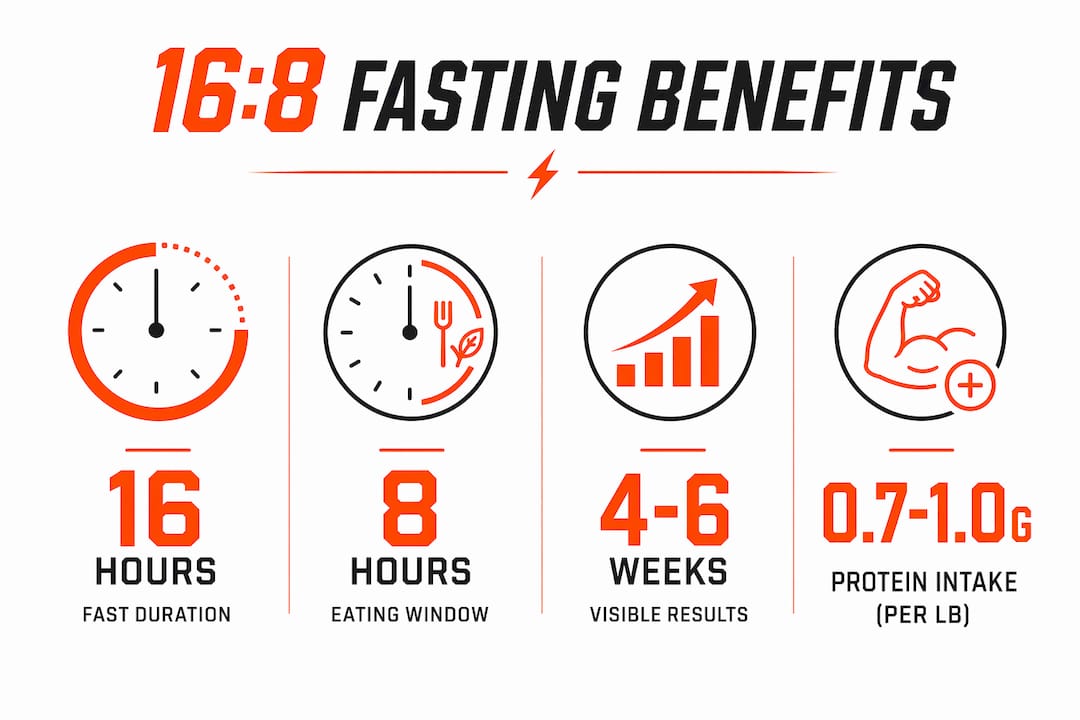
The 16:8 fasting method is a time-restricted eating schedule where you fast for sixteen hours and eat all your meals within an eight-hour window each day. Clinically, this falls under the broader category of intermittent fasting, a pattern of eating that cycles between defined fasting and eating periods. The core mechanism is metabolic: after roughly twelve hours without food, your liver depletes its glycogen stores, and your body shifts to burning fat for fuel. That final four-hour stretch of the fast is where the metabolic benefit concentrates. This intermittent fasting guide covers the science, the practical steps, and the common mistakes so you can apply it correctly from day one.
How does the 16:8 fasting method work?
The 16:8 method works by triggering metabolic switching, the point at which your body stops running on glucose and starts oxidizing fat. Liver glycogen depletes after about twelve hours of fasting, so the last four hours of a sixteen-hour fast are when fat burning accelerates. Dr. Mark Mattson at Johns Hopkins has described this switch as the central driver of the method’s metabolic benefits, not calorie restriction alone.
What you can consume during the fasting window
During the sixteen-hour fast, only zero-calorie drinks are permitted. Water, black coffee, and unsweetened tea all qualify. Caloric drinks, including milk in coffee or sweetened beverages, break the fast and reduce its benefits. Artificial sweeteners are a gray area; some research suggests they may trigger an insulin response in certain people, so plain water is the safest default.

Typical fasting schedules and flexibility
The most common 16:8 fasting schedule runs from 8:00 PM to 12:00 PM the next day, with an eating window from noon to 8:00 PM. That structure works well because most of the fast happens during sleep. You can shift the window earlier (7:00 AM to 3:00 PM) or later (1:00 PM to 9:00 PM) to match your routine. The window itself matters more than the exact hours.
How your body adapts over the first few weeks
Hunger during the fasting window is real at first, but it is driven by habit, not biology. Morning hunger sensations typically subside within 2–3 weeks as the body adjusts its ghrelin rhythm. Ghrelin, the hormone that signals hunger, is largely conditioned by meal timing. Shift the timing consistently, and the hunger signals follow.
Pro Tip: Set a consistent alarm for both the start and end of your eating window for the first two weeks. Consistency trains ghrelin faster than willpower alone.
Who should consider or avoid the 16:8 diet plan?
The 16:8 diet plan suits most healthy adults, but specific groups face real risks. People with the following conditions should avoid it or proceed only with medical supervision:
Type 1 diabetes: Fasting alters insulin requirements significantly and can cause dangerous blood sugar swings.
Eating disorders: Structured restriction can reinforce disordered patterns, even when the intent is health-focused.
Very low muscle mass: Extended fasting without adequate protein accelerates muscle loss in people who are already lean or frail.
Pregnancy and breastfeeding: Caloric and nutrient demands are too high to safely compress into an eight-hour window.
People with these conditions should consult a physician before starting any fasting protocol. For everyone else, common early side effects include headaches, fatigue, and irritability. These typically resolve within the first two weeks as the body adapts. If they persist beyond three weeks, the protocol needs adjustment, not more willpower.
What are the practical steps to start 16:8 fasting?
The most effective way to start is with a gradual ramp-up, not a cold-turkey sixteen-hour fast on day one. The LBE ramp protocol phases fasting incrementally over three weeks to adapt hunger hormones before reaching the full 16:8 schedule.
Week 1: Lengthen. Start with a 12:12 schedule. Fast from 8:00 PM to 8:00 AM. This is likely close to what you already do naturally.
Week 2: Build. Extend to 14:10. Push breakfast back by two hours to 10:00 AM. Notice how hunger responds without forcing it.
Week 3: Establish. Move to the full 16:8. Breakfast shifts to noon. By this point, ghrelin has largely recalibrated.
Meal composition during the eating window
What you eat during the eight hours matters as much as the timing. Protein intake of 0.7–1.0 g per pound of body weight preserves muscle mass during fasting. Hitting that target across two or three meals is achievable but requires planning. Prioritize protein at every meal before filling in carbohydrates and fats.
Training timing and the eating window
Resistance training performed near the start of your eating window gives you immediate access to protein for recovery. If you train fasted, keep sessions moderate in intensity and consume protein within thirty minutes of finishing. Fasted cardio is well-tolerated by most people and does not require the same urgency around post-workout nutrition.
Pro Tip: If you train in the morning while fasted, a black coffee thirty minutes before your session improves performance without breaking the fast.
How does 16:8 fasting compare to other intermittent fasting methods?
The 16:8 method sits in the middle of the intermittent fasting spectrum. Understanding where it fits helps you choose the right protocol for your lifestyle.
Fasting method | Fasting window | Best suited for | Key tradeoff |
12:12 | 12 hours | Beginners, maintenance | Minimal metabolic switching |
14:10 | 14 hours | Transition phase | Moderate adherence, moderate results |
16:8 | 16 hours | Fat loss, metabolic health | Requires consistent scheduling |
18:6 | 18 hours | Advanced practitioners | Higher dropout risk |
5:2 | 2 days restricted | Those who prefer weekly cycles | Harder to maintain socially |
The honest finding from meta-analyses on weight loss is that 16:8 fasting produces results comparable to matched calorie restriction, not superior to it. The weight loss comes primarily from eating less by compressing the window, not from fasting magic. That is not a weakness of the method. It is actually its strength: the structure does the calorie control for you without requiring you to count anything.
Intermittent fasting is not a magic pill for weight loss if total calories remain unchanged. The method works because it eliminates snacking opportunities and reduces mindless eating. Pair it with resistance training and adequate protein, and muscle mass stays intact while fat drops.
Tips for maximizing 16:8 fasting results and avoiding pitfalls
Most people who fail at 16:8 fasting make the same predictable mistakes. Avoiding them is straightforward once you know what they are.
Skip the cold-turkey start. Jumping straight to sixteen hours causes ghrelin spikes that drive early dropout. Use the LBE ramp instead.
Hydrate aggressively in the morning. Dehydration mimics hunger. Drink 16–20 oz of water immediately after waking to blunt false hunger signals.
Anchor your fast with a behavioral cue. Brushing your teeth at the close of your eating window signals the brain that eating is done. This simple routine reduces late-night snacking more reliably than motivation.
Do not let the eating window become a free-for-all. Compressing calories into eight hours does not justify poor food quality. Micronutrient gaps appear quickly when meal variety drops.
Track your eating window, not your calories. Fasting works partly because it removes the mental burden of constant tracking. Use a simple fasting tracking app to log your window start and end times without obsessing over macros.
Pro Tip: Prepare your first meal the night before. Decision fatigue at noon leads to poor food choices. A ready meal removes that friction entirely.
Key Takeaways
The 16:8 fasting method produces fat loss and metabolic benefits primarily by compressing your eating window, reducing calorie intake passively, and triggering metabolic switching after twelve hours of fasting.
Point | Details |
Metabolic switching starts at hour 12 | Fat oxidation accelerates in the final four hours of a 16-hour fast. |
Ramp up gradually | Use the LBE protocol over three weeks to reduce ghrelin spikes and dropout. |
Protein is non-negotiable | Consume 0.7–1.0 g of protein per pound of body weight to preserve muscle. |
Behavioral cues improve adherence | Anchoring your fast with a routine like brushing teeth reduces late-night eating. |
Fasting is not a calorie loophole | Weight loss requires an actual calorie deficit; fasting creates the structure to achieve it. |
Why I think most people approach 16:8 fasting backward
Most people treat the 16:8 schedule as the goal. They count down to noon, break their fast, and feel like they have accomplished something. The eating window is not the achievement. What you do inside it is.
I have seen people run a clean sixteen-hour fast and then undo it with two hours of grazing. The fasting window creates the conditions for fat loss. Nutrition inside the eating window determines whether those conditions actually produce results. That distinction matters more than any specific fasting schedule.
The other thing I would push back on is the idea that stricter is better. Moving from 16:8 to 18:6 does not double your results. It doubles your hunger and your risk of muscle loss if protein intake slips. The right fasting schedule is the one you can hold for six months, not the most aggressive one you can survive for two weeks.
Fasting works best when it fits your life, not when your life bends around it. If your eating window consistently conflicts with family dinners or work lunches, the schedule is wrong for you, not the other way around. Adjust the window. Keep the structure. The biology does not care whether you eat from noon to 8:00 PM or from 2:00 PM to 10:00 PM.
Consistency over complexity. That is the only principle that holds across every person I have seen succeed with this method long-term.
— Tony Lindsay
ForgeFast and the structure behind sustainable fasting
Knowing the science behind 16:8 fasting is one thing. Maintaining the schedule when life gets complicated is another problem entirely.

ForgeFast is built around exactly that gap. The ForgeFast method combines the metabolic framework of intermittent fasting with the behavioral structure that makes it stick long-term. It addresses the psychological side of fasting, not just the biological side, which is where most people actually struggle. If you want a system that tracks your fasting windows, reinforces your habits, and adapts to your schedule, the ForgeFast app gives you that structure without the guesswork of building it yourself. The method is grounded in both biological science and behavioral psychology, which is what separates it from a standard diet program.
FAQ
What is the 16:8 fasting method?
The 16:8 method is a time-restricted eating schedule where you fast for sixteen hours and eat within an eight-hour window each day. After roughly twelve hours of fasting, the body shifts from burning glucose to burning fat for energy.
How long does it take to see results from 16:8 fasting?
Most people notice changes in hunger patterns within 2–3 weeks and measurable weight loss results within 4–6 weeks, provided total calorie intake supports a deficit.
Can I drink coffee during the 16:8 fasting window?
Black coffee is permitted during the fasting window because it contains no calories. Adding milk, cream, or sugar breaks the fast and reduces its metabolic benefits.
Is 16:8 fasting effective for weight loss?
Yes, but the weight loss comes from eating less overall, not from fasting itself. Meta-analyses confirm that 16:8 fasting produces results comparable to standard calorie restriction when total intake is matched.
Who should not try the 16:8 fasting schedule?
People with type 1 diabetes, active eating disorders, very low muscle mass, or those who are pregnant or breastfeeding should avoid 16:8 fasting or consult a physician before starting.
Recommended
Comments