Why Consistent Fasting Rewires Your Brain


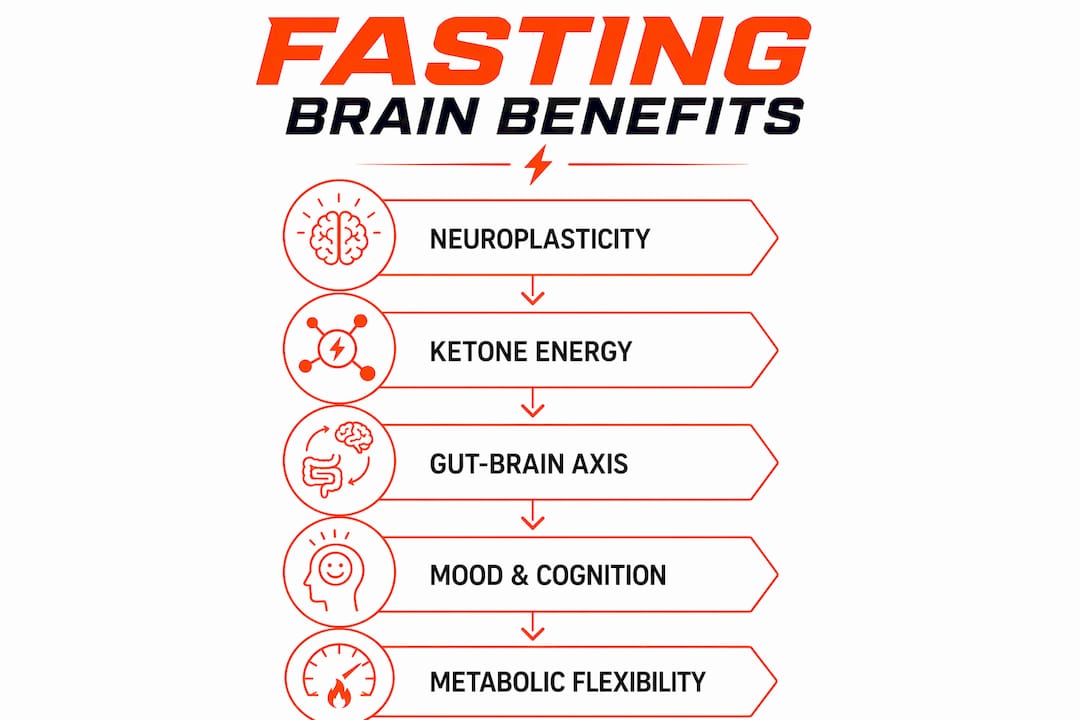
Consistent fasting rewires the brain by triggering measurable neurobiological changes, including increased brain-derived neurotrophic factor (BDNF), reduced pro-inflammatory cytokines like TNF-α and IL-6, and a metabolic shift to ketone bodies that provides cleaner, more stable neural energy. These are not abstract benefits. Recent 2026 clinical studies link regular fasting to improved anxiety scores, better depression outcomes, and stable cognitive performance across thousands of participants. The process scientists call neuroplasticity, the brain’s ability to reorganize and strengthen its own connections, accelerates under consistent fasting conditions. Understanding why this happens gives you a concrete reason to treat fasting as a brain investment, not just a weight management tool.
Why consistent fasting rewires the brain: the neurobiology
Fasting changes the brain at the molecular level, and BDNF is the clearest proof. BDNF acts like fertilizer for neurons. It supports synaptic plasticity, the process by which brain cells form stronger connections, and it protects existing neurons from stress-related damage. Research confirms that fasting increases BDNF while simultaneously reducing TNF-α and IL-6, the cytokines most responsible for neuroinflammation. Lower neuroinflammation means neurons communicate more efficiently and resist damage longer.
The metabolic switch to ketones is equally significant. When you fast long enough to deplete liver glycogen, your body begins producing β-hydroxybutyrate, a ketone body that crosses the blood-brain barrier and serves as a premium fuel source. Unlike glucose, ketones support mitochondrial function and reduce oxidative damage in neural tissue. That matters because oxidative stress is a primary driver of cognitive decline.

Fasting also activates autophagy, the cellular cleanup process that removes damaged proteins and dysfunctional mitochondria from neurons. Think of autophagy as the brain’s maintenance crew. Without regular activation, cellular debris accumulates and impairs neural signaling. Consistent fasting keeps that crew working on schedule.
Key neurobiological mechanisms activated by consistent fasting:
BDNF upregulation: Strengthens synaptic connections and supports neuronal survival
Cytokine reduction: Lower TNF-α and IL-6 reduce chronic neuroinflammation
Ketone production: β-hydroxybutyrate provides stable, oxidative-stress-reducing brain fuel
Autophagy activation: Clears damaged cellular components from neurons
Mitochondrial efficiency: Fasting improves energy production at the cellular level
Pro Tip: Start with a 12-hour overnight fast to trigger the early stages of ketone production without stressing your system. Most people achieve this simply by finishing dinner by 8:00 PM and eating breakfast after 8:00 AM.
How does fasting influence the gut-brain axis?
The gut-brain axis is the bidirectional communication network between your digestive system and your central nervous system. Fasting reshapes this network in ways that directly affect mood, cravings, and cognitive clarity. A 2026 study of obese adults found that gut microbiome shifts during fasting correlated with measurable changes in brain regions controlling appetite and self-control. That finding reframes fasting as a behavioral tool, not just a metabolic one.
The gut produces neurotransmitters, including serotonin and GABA, that regulate mood and anxiety. When fasting alters microbial diversity, it changes the volume and type of these chemical signals reaching the brain. Harmful microbial byproducts, sometimes called neurotoxins, also decrease during fasting periods. The result is a quieter, less inflamed neural environment.
Animal research reinforces this picture. A study published in Nature found that fasting protects against depression-like behaviors and preserves myelin integrity, the protective sheath around nerve fibers, through gut microbiota modulation. Myelin damage is associated with cognitive slowing and mood disorders. Protecting it through dietary consistency is a significant finding.
The practical implication is straightforward:
Fasting reduces the feeding window, which limits exposure to foods that feed harmful gut bacteria.
Microbial diversity improves, shifting the gut environment toward strains that produce beneficial neurotransmitters.
Gut-derived inflammatory signals to the brain decrease, reducing anxiety and improving focus.
Appetite-regulating hormones like ghrelin recalibrate, reducing impulsive food cravings.
Mood stability improves as serotonin precursor availability increases through a healthier microbiome.
What does research say about fasting, cognition, and mood?
The clinical evidence on fasting and brain health is stronger in 2026 than at any prior point. A cohort study of 336 adults found that four weeks of consistent fasting produced statistically significant improvements in both GAD-7 anxiety scores and PHQ-9 depression scores, with p-values below 0.001. That level of statistical confidence is rare in nutrition research. Quality of life scores also improved significantly.
The persistent myth that fasting causes brain fog has been directly challenged by large-scale analysis. A systematic review of 71 studies covering 3,484 participants showed that short-term fasting does not impair cognition in healthy adults. Modest cognitive reductions appeared only in children and teenagers fasting beyond 12 hours. For adults, cognitive performance remained stable or improved.
Metabolic control is another pathway connecting fasting to brain health. A synthesis of over 225 clinical trials found that fasting reduces HbA1c by 0.3–1.2%. Lower HbA1c reflects better blood sugar regulation, which directly reduces the glucose spikes and crashes that cause cognitive variability. Stable blood sugar means a more consistent mental state throughout the day.
Research finding | Measure | Outcome |
4-week fasting cohort (n=336) | GAD-7, PHQ-9 | Significant anxiety and depression improvement (p<0.001) |
Systematic review (71 studies, n=3,484) | Cognitive performance | No decline in healthy adults during short-term fasting |
225+ clinical trials synthesis | HbA1c | Reduction of 0.3–1.2%, supporting metabolic brain health |
Gut-brain axis study (obese adults) | Brain activity patterns | Shifts in appetite and self-control regions |
How to sustainably integrate fasting for lasting brain benefits
Sustainable fasting for cognitive gain depends on metabolic flexibility, the body’s ability to switch efficiently between glucose and ketone metabolism. People who jump into aggressive fasting windows before developing this flexibility often experience fatigue and irritability, which they misattribute to fasting itself. The adaptation period typically takes two to four weeks of consistent practice.
A 12–14 hour fasting window is the evidence-backed starting point for mental clarity without triggering a cortisol stress response. This window is achievable for most people without disrupting social eating patterns. The mental clarity benefits from this range come primarily from stabilized blood sugar and early ketone production, not from extreme caloric restriction.
Consistency matters more than duration. Cohort data shows that regular fasting habits improve cognitive and mood measures more reliably than occasional long fasts. Consistency also eliminates decision fatigue around meal timing, which itself reduces cognitive load and frees mental bandwidth for higher-order thinking.
Key factors that determine whether fasting produces lasting brain benefits:
Sleep quality: Poor sleep blunts BDNF production and negates fasting’s anti-inflammatory effects
Dietary quality within the eating window: Processed foods during eating periods reintroduce the inflammation fasting works to reduce
Stress management: Chronic stress elevates cortisol, which counteracts the neurological benefits of fasting
Hydration: Dehydration mimics brain fog and is frequently confused with fasting side effects
Gradual window extension: Expanding fasting duration by 30 minutes per week prevents the stress response that undermines adaptation
Pro Tip: Track your fasting window and your mental clarity score each morning on a simple 1–10 scale. After four weeks, you will see a pattern that tells you exactly which window length produces your clearest thinking.
The neurological benefits of intermittent fasting compound over time. The brain changes observed in four-week studies are a starting point, not a ceiling. Treating fasting as a permanent lifestyle structure, rather than a short-term protocol, is what produces the durable cognitive shifts the research documents.
Key Takeaways
Consistent fasting rewires the brain through BDNF upregulation, reduced neuroinflammation, ketone-based energy, and gut-brain axis modulation, with clinical evidence confirming improvements in anxiety, depression, and cognitive stability.
Point | Details |
BDNF and inflammation | Fasting increases BDNF and lowers TNF-α and IL-6, directly strengthening neural connections. |
Ketone metabolism | The shift to β-hydroxybutyrate provides stable brain fuel and reduces oxidative neural damage. |
Gut-brain axis | Fasting reshapes gut microbiota, improving mood-regulating neurotransmitter signals to the brain. |
Clinical mood outcomes | Four weeks of consistent fasting produced significant anxiety and depression score improvements in adults. |
Consistency over duration | Regular fasting habits drive cognitive benefits more reliably than occasional extended fasts. |
The part most people get wrong about fasting and the brain
People treat fasting as a physical intervention and are then surprised when their thinking sharpens. The brain benefits are not a side effect. They are a primary outcome, and the neuroscience has been pointing in this direction for years.
What I find most underappreciated is the gut-brain connection. Most people who start fasting report that their cravings change before their weight does. That is the gut-brain axis recalibrating in real time. The microbiome shifts, the reward circuits quiet down, and suddenly the pull toward impulsive eating weakens. That is not willpower. That is biology responding to a consistent signal.
The other thing I have observed is that people quit fasting right before the adaptation window closes. The first two weeks can feel rough, especially if someone is metabolically inflexible from years of frequent eating. But the cognitive clarity that emerges after that adaptation period is qualitatively different from anything a cup of coffee produces. It is steady, not spiked.
My honest view is that fasting’s mental health benefits will eventually be taken as seriously as its metabolic ones. The 2026 cohort data on anxiety and depression scores is not a fluke. It reflects a real neurobiological shift that happens when you give the brain a consistent metabolic and inflammatory reset. The fasting and stress management connection is part of the same picture. You cannot separate brain chemistry from lifestyle structure.
Start with 12 hours. Stay consistent for four weeks. Then decide what you think.
— Tony Lindsay
ForgeFast: a structured path to fasting-driven brain health
The science is clear. The harder part is building the consistency that makes the neurological changes stick.

ForgeFast is built around exactly that challenge. The ForgeFast method integrates intermittent fasting with a structured lifestyle framework that addresses the mental side of habit formation, not just the physical one. It guides you through the metabolic adaptation window, helps you identify your optimal fasting window for mental clarity, and builds the daily consistency that clinical research shows is the real driver of cognitive and mood improvements. If you are serious about using fasting to improve how your brain performs, ForgeFast gives you the structure to make it last.
FAQ
Does fasting actually improve brain function?
Yes. A systematic review of 71 studies found no cognitive decline in healthy adults during short-term fasting, and multiple studies show improvements in mood, focus, and anxiety scores after consistent fasting.
How long does it take for fasting to rewire the brain?
Measurable changes in anxiety and depression scores appear within four weeks of consistent fasting, based on cohort data from 336 adults following a regular fasting protocol.
What is the best fasting window for mental clarity?
A 12–14 hour fasting window produces mental clarity benefits without triggering a cortisol stress response, making it the evidence-backed starting point for cognitive improvement.
Why does fasting reduce brain fog?
Fasting stabilizes blood sugar, shifts the brain to ketone metabolism, and reduces gut-derived inflammatory signals. These three changes together eliminate the glucose variability that causes most brain fog.
Does the gut have anything to do with fasting and mood?
Directly. Fasting alters gut microbial diversity, which changes the neurotransmitter signals sent to the brain. Research links these gut-brain axis shifts to reduced depression-like behaviors and improved self-control.
Recommended
Comments