Ease Fasting Cravings in 20–30 Minutes for Practitioners

Most cravings during fasting are ghrelin waves and learned mealtime cues, not a real energy shortage. They typically peak, then fade within 20 to 30 minutes. The immediate move: drink water, wait it out, and distract yourself for a few minutes. The lasting fix is adjusting what and when you eat during your feeding window so those waves get smaller over time.
TL;DR:
Cravings during fasting are driven by hormonal waves, mainly ghrelin, which peak at regular mealtimes, not a true energy deficiency.
Consistent eating windows help retrain ghrelin timing, reducing the intensity of cravings over two to three weeks, but individual responses vary.
Managing cravings involves hydrating, engaging in distraction techniques, and optimizing meal composition with protein, healthy fats, and fiber to boost satiety.
Sudden and severe symptoms like shakiness or confusion indicate hypoglycemia and require immediate food intake; fasting is not suitable for some health conditions.
How you break your fast significantly influences next-day hunger; prioritize protein, healthy fats, and vegetables, and avoid refined carbs late in the evening.
Table of Contents
What Actually Causes Cravings During Fasting?
Ghrelin is the hormone behind most of what you feel as hunger during a fast, and it doesn’t rise steadily. It arrives in waves, timed to when you’d normally eat. Skip lunch at noon for two weeks straight and your gut starts releasing ghrelin right around noon whether food shows up or not. That’s entrainment, and it’s why cravings often hit hardest at your old meal times rather than randomly throughout the day.
But ghrelin isn’t just an “eat now” signal. Research using fMRI scans found that both fasting and direct ghrelin administration increase activity in the orbitofrontal cortex and hippocampus, the brain’s reward and memory circuits, and make high-calorie foods look more appealing on a plate than they would otherwise. That ghrelin, fasting, and reward-circuit activation study is worth knowing about because it reframes the craving. You’re not weak. Your brain is temporarily wired to find a donut more compelling than usual.
Insulin, leptin, and GLP-1 round out the picture. As blood sugar drops from its last peak, insulin falls, and the transition itself, not just the absolute glucose number, can trigger a hunger signal. Leptin (your fat-storage signal) and GLP-1 (a fullness hormone released after eating) both dip during extended fasts, which removes some of the natural brakes on appetite.
Then there’s conditioning, which has nothing to do with hormones. The smell of a coworker’s lunch, walking past the break room, scrolling food videos at 9 p.m., these are learned triggers, and they fire regardless of your actual ghrelin level.
When Do Cravings Peak, and How Long Until They Ease Up?
Cravings tend to arrive in waves lasting 20 to 60 minutes, then dissolve on their own if you don’t feed them. Most people notice two predictable danger zones: late morning (roughly the old breakfast or lunch slot) and evening, when circadian biology and boredom both work against you.
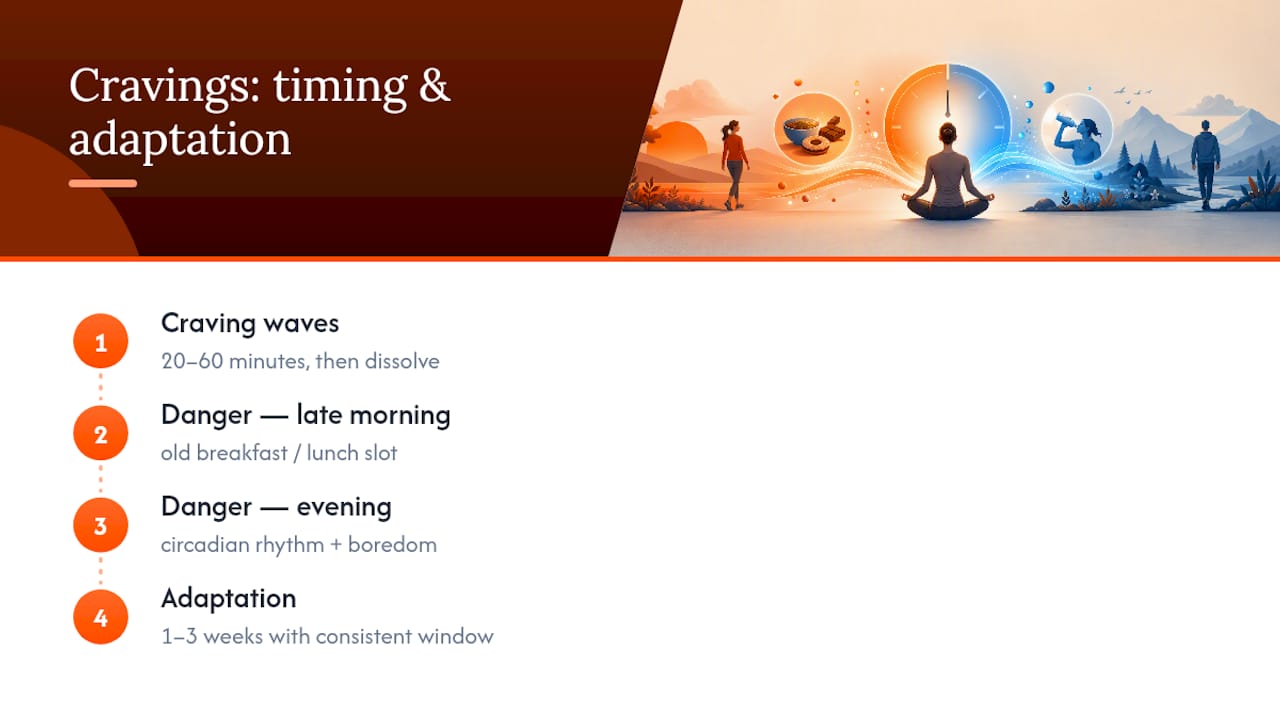
Adaptation is real but variable. Many people report a noticeable drop in craving intensity within one to three weeks of consistent fasting, as ghrelin timing shifts to match the new eating window. Not everyone adapts at the same rate. A 24-hour fasting hormonal response study found wide individual variation in how much ghrelin rises during a fast, and people with larger spikes also showed bigger drops in 24-hour energy expenditure, a pattern sometimes called the thrifty phenotype. Some bodies just hold on harder.
The practical takeaway: keep your eating window consistent, even on hard days. Caving at the old lunchtime just re-teaches your gut that noon still means food.
How to Manage Fasting Cravings in the Moment and Over Time
Treat cravings as two separate problems: what to do in the next five minutes, and what to change over the next five days.
In the moment, the fastest lever is water. Plain or sparkling both work, and a full glass can blunt hunger signals long enough for the wave to pass. Pair it with a short mental trick: the 5-4-3-2-1 grounding exercise (name five things you see, four you hear, three you can touch, and so on), a five-minute walk, or slow diaphragmatic breathing. None of this is glamorous. It works because most cravings genuinely dissolve within half an hour if you don’t act on them.
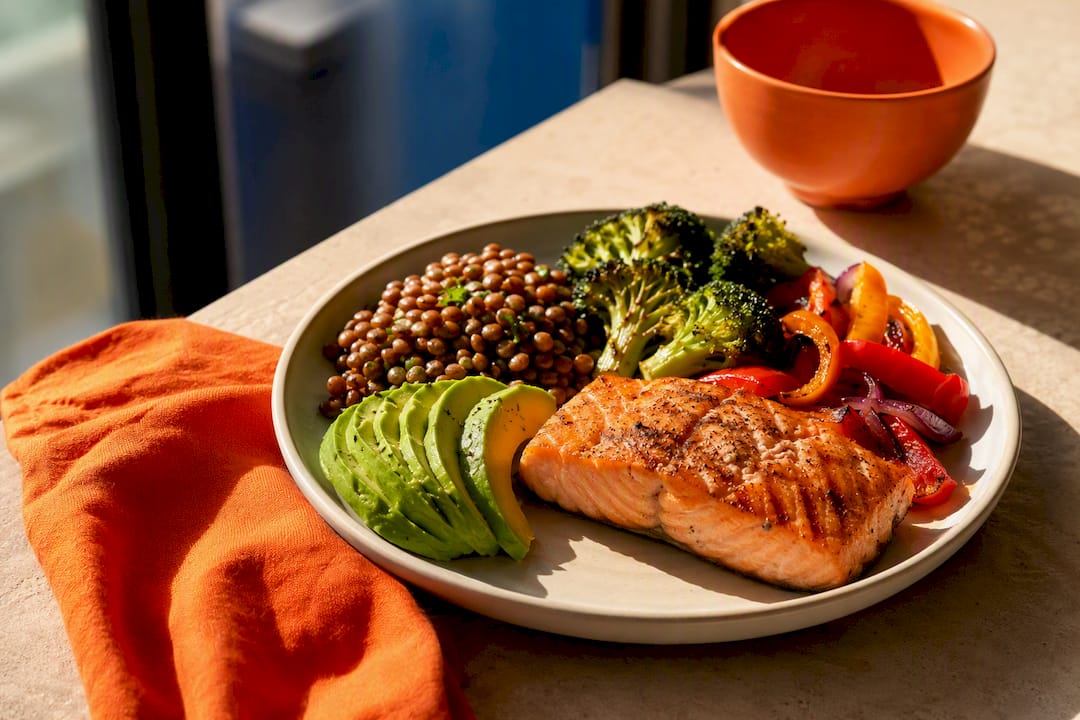
During your feeding window, meal composition determines how hard tomorrow’s cravings hit. Front-load protein, aim for 25 to 40 grams at your first meal, since higher-protein meals raise satiety hormones like PYY and GLP-1 and blunt subsequent cravings. Add healthy fats (olive oil, avocado, nuts) and fiber (vegetables, legumes) to slow digestion and help stretch fullness longer.
Hydration and electrolytes matter more on longer fasts. Past 16 to 18 hours, a pinch of sodium, a source of potassium (like a small amount of coconut water), or a magnesium supplement can prevent the headache-and-irritability combo that often gets misread as hunger. This isn’t necessary for a standard 14 to 16 hour window.
Sleep and circadian timing are underrated levers. Shifting your eating window earlier and protecting sleep quality both reduce the evening craving spike, since appetite and reward sensitivity climb after dark regardless of what you ate that day.
Behavioral tactics round things out:
Schedule demanding, focus-heavy work during your known peak craving hours so you’re distracted by default.
Change your physical location when a craving hits, leave the kitchen, step outside.
Brush your teeth or chew sugar-free gum. Minty breath makes food less appealing.
Set routine anchors (a walk, a call, a specific task) at the times cravings usually strike.
Noncaloric herbal tea and black coffee are generally fine during a fast, and some people find L-theanine helpful for taking the edge off restlessness without caffeine’s jitters. Be cautious with artificial sweeteners. Some studies suggest they can still provoke an insulin response in sensitive individuals, which may sharpen hunger rather than curb it.
Pro Tip: Keep a glass of water and a timer on your desk during your known craving window. When a craving hits, drink the whole glass and set the timer for 20 minutes before you allow yourself to reconsider eating. Most of the time, you won’t need to.
When a Craving Signals Something More Serious
Ordinary fasting hunger feels like an ache, an urge, or a mental fixation on food. It is not the same as shakiness, cold sweats, confusion, a racing heart, or fainting. Those are hypoglycemia warning signs, and they mean break the fast and eat something with fast-acting carbohydrate, don’t wait it out.
If you take insulin or another glucose-lowering medication, are pregnant, or have a history of disordered eating, talk to a clinician before starting any fasting protocol. Prolonged fasting has been shown to intensify cravings and affect mood, which can be a meaningful risk factor for anyone with a history of disordered eating.
If symptoms feel ambiguous, a fingerstick glucose check settles it fast. Under 70 mg/dL with symptoms means stop. When in doubt, prioritize electrolytes and food over pushing through.
Breaking Your Fast Without Setting Up Tomorrow’s Cravings
How you break a fast shapes how hungry you’ll be during the next one. Skip the instinct to reach for something sweet or starchy first; that spikes and crashes blood sugar, which often triggers a second craving wave within hours.
Build your opening meal around 25 to 40 grams of protein, a source of fat, and fiber-rich vegetables before you touch refined carbohydrates. Try to finish your largest meal earlier in the evening rather than right before bed, since late, heavy meals disrupt both sleep and next-day ghrelin timing. Avoid refined sugar late in the window entirely if evening cravings are your weak point.
If you’re extremely hungry and need to ease in gently:
Drink a full glass of water first.
Eat a small protein-and-fat starter (a few nuts, a hard-boiled egg).
Wait 10 minutes before your main meal.
Build the main meal around protein, vegetables, and healthy fat.
Add starchy carbs last, and only if still hungry.
The ForgeFast Approach to Rewiring Fasting Habits
Physiology explains the craving. Habit design determines whether you act on it. ForgeFast’s approach leans on habit scaffolding: consistent fasting windows, small daily micro-commitments, and external anchors (a set walk, a fixed hydration ritual) that make the fasting schedule automatic rather than a daily negotiation.
For the craving itself, a short script helps: “This is a wave. It will pass in 20 minutes whether I eat or not.” Pair it with box breathing, four counts in, four held, four out, four held, repeated five times.
For real adaptation, run a two-week reset: consistent eating and fasting windows daily, protein-forward meals, an earlier dinner, seven-plus hours of sleep, and one scheduled distraction activity placed right before your usual peak craving hour. Most people notice ghrelin waves softening well before the two weeks are up.
A Few Honest Notes on What Actually Works
The first real craving I watched someone struggle through wasn’t at dinner, it was at 10 a.m., right at the old breakfast slot, three days into a new fasting schedule. Water and a five-minute walk killed it in under fifteen minutes. That’s the pattern almost every time.
Three rules matter more than the rest: protein at your first meal, a fixed eating window you don’t renegotiate daily, and a distraction ready before the craving hits, not after. Track how strong the cravings feel for two weeks. If they’re not softening, adjust one variable at a time, meal timing, sleep, or window length, rather than overhauling everything at once.
— Tony Lindsay
Sources
The ghrelin and energy-expenditure findings above come from a 24-hour fasting hormonal study; the reward-circuit research is from a ghrelin and brain-imaging study. Appetite-hormone differences across fasting protocols draw on a time-restricted feeding review, and safety guidance follows Mayo Clinic’s hypoglycemia resource.
Ready to put a structured system behind these tactics instead of guessing your way through week one? ForgeFast pairs the physiology in this guide with habit coaching built specifically for sustainable fasting adherence.
This article is general information, not a substitute for advice from a qualified doctor. Consult a qualified healthcare professional about your own circumstances before acting on anything here.
Recommended
Comments