Sustainable Eating Habits Long Term: Your Practical Guide

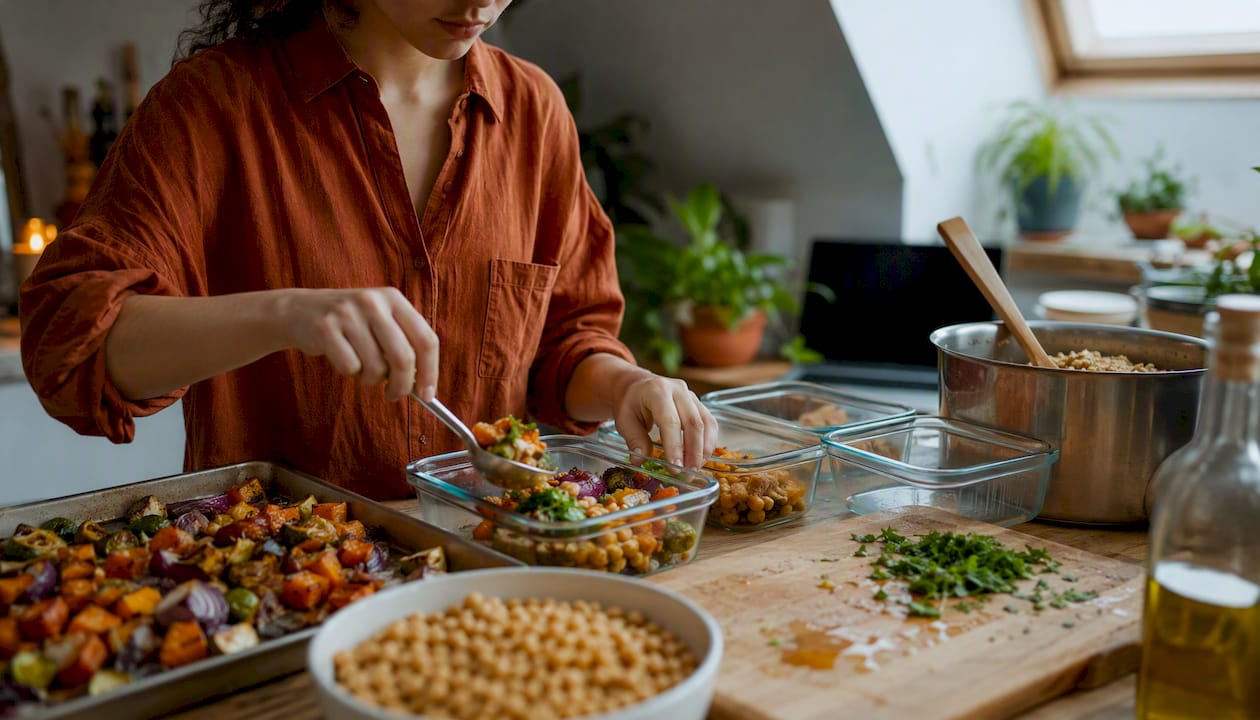
Sustainable eating for the long term is a flexible, plant-forward pattern you can actually keep for life. Not a 30-day challenge. Not a rigid elimination protocol. A durable system built on habits, not willpower.
Your 3-step quick start:
Add two plant-forward meals to your week today (swap one meat-based dinner for lentils, beans, or tofu).
Cut one source of food waste this week (plan meals before shopping, or commit to a “use it up” dinner on Thursdays).
Pick one eating habit to automate (a consistent breakfast, a weekly batch-cook session, or a standing grocery list).
You can act on all three within 72 hours. The evidence base for this guide draws on Harvard T.H. Chan’s Nutrition Source, the EAT-Lancet Commission’s planetary health framework, and USDA MyPlate guidance, combined with behavioral science on habit formation.
Table of Contents
Behavioral strategies that make sustainable eating automatic
The gap between knowing what to eat and actually eating it consistently is a behavior problem, not an information problem. Habit systems close that gap.
Research consistently shows that personalized habit scaffolding, including habit stacking, implementation intentions, and tracking, improves long-term dietary adherence more reliably than prescriptive meal plans. Here’s how each tool works in practice:
1. Habit stacking
Attach a new behavior to an existing one. The formula: “After I [current habit], I will [new sustainable-eating behavior].”
“After I make my morning coffee, I will prep my lunch vegetables.”
“After I finish dinner, I will pack tomorrow’s breakfast.”
“After I write my grocery list, I will check what’s already in the fridge.”
The existing habit acts as a reliable trigger. No motivation required.
2. Implementation intentions
Vague plans fail. Specific ones stick. Instead of “I’ll eat more plants this week,” write: “On Monday and Wednesday evenings, I will cook a bean-based dinner using the recipe I saved.”
The specificity of when, where, and what removes the decision in the moment. You’ve already made the choice.
3. Environment design
What’s visible and easy gets eaten. What’s hidden and inconvenient doesn’t.
Keep a bowl of fruit on the counter.
Pre-wash and portion vegetables when you get home from the store.
Move processed snacks to the back of the pantry or out entirely.
Keep a container of cooked grains in the fridge for fast meals.
4. Tracking and feedback loops
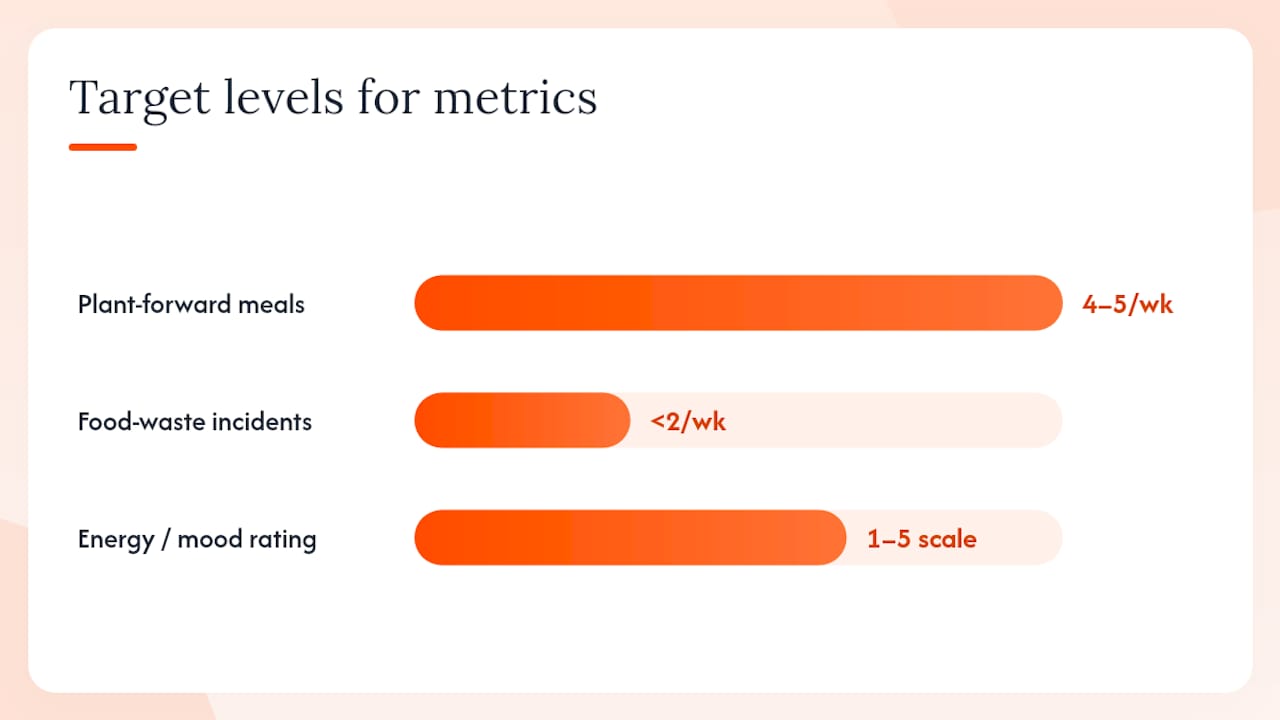
Digital tracking with personalized feedback supports sustained behavior change by connecting daily actions to visible outcomes. You don’t need a complex system. Track three things: plant-forward meals per week, food-waste incidents, and a simple energy or mood rating. Review weekly. Adjust monthly.
5. Cue-routine-reward cycles
Every habit has three parts: a cue (what triggers it), a routine (the behavior), and a reward (what reinforces it). To build a leftovers habit, for example: the cue is Sunday evening, the routine is portioning leftovers into labeled containers, and the reward is a noticeably easier Monday lunch. Making the reward explicit speeds up the loop.
Pro Tip: Build in a “good enough” rule from the start. If you hit your plant-forward meal target 80% of weeks, that’s a successful habit. Demanding 100% creates fragility. The moment you miss a week, the all-or-nothing mindset kicks in and the habit collapses. Flexibility is a feature, not a compromise.
Day-to-day tactics for shopping, meal prep, and simple swaps
Knowing the principles is one thing. Having a Tuesday-night dinner plan is another.
Pantry staples to always have on hand:
Dried or canned lentils, black beans, chickpeas
Whole grains: brown rice, quinoa, rolled oats, whole-wheat pasta
Canned tomatoes, tomato paste, coconut milk
Frozen vegetables: spinach, edamame, peas, broccoli
Nuts and seeds: almonds, sunflower seeds, chia seeds
Olive oil, garlic, onions, cumin, smoked paprika
These 15 items cover the base of dozens of meals. Budget-friendly versions of all of them are available at any U.S. grocery chain.
Two meal-prep workflows:
30-minute weekly batch (Sunday): Cook a large pot of grains (brown rice or quinoa), roast two sheet pans of vegetables with olive oil and spices, and prepare one protein (hard-boiled eggs, baked tofu, or a pot of lentils). Store in separate containers. Mix and match across four days of lunches and dinners.
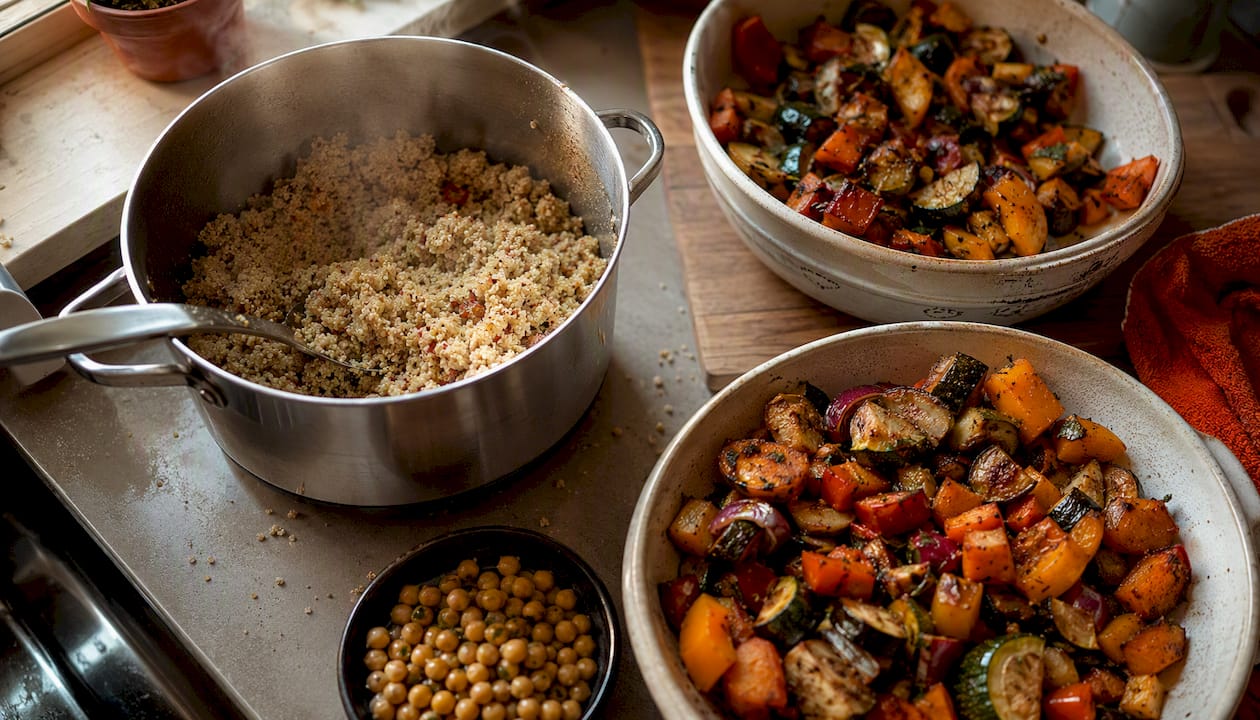
10-minute nightly rescue: Before bed, check what needs to be used before it spoils. Wilting greens go into a smoothie or soup base. Leftover grains become a fried rice or grain bowl. Overripe fruit gets frozen for smoothies. This routine alone can cut household food waste significantly.
Swap table:
Instead of | Try | Health benefit | Environmental benefit |
Red meat (daily) | Lentils, chickpeas, or chicken (3–4x/week) | Lower saturated fat, higher fiber | Substantially lower greenhouse gas emissions |
Processed snack bars | Whole fruit + a handful of nuts | More fiber, fewer additives | Less packaging waste |
Refined white bread | Whole-grain bread or oats | Higher fiber, steadier blood sugar | Marginally lower processing energy |
Bottled juice | Whole fruit or infused water | More fiber, less added sugar | Less plastic waste |
Beef-based pasta sauce | Lentil or mushroom bolognese | Comparable protein, more fiber | Lower land and water use |
A sample day of meals:
Breakfast: Overnight oats with chia seeds, frozen berries, and a spoonful of almond butter.
Lunch: Grain bowl with quinoa, roasted sweet potato, chickpeas, spinach, and tahini dressing.
Dinner: Lentil soup with crusty whole-grain bread and a side salad.
Snack: Apple with a small handful of walnuts.
Every item on this list is available at a standard U.S. grocery store for well under $15 total per day.
Portioning and cooking hacks:
Use vegetable peels and stems in homemade stock rather than discarding them.
Cook grains in large batches and freeze half for later weeks.
Portion proteins by hand (a palm-sized serving) rather than weighing, which reduces friction.
WWF’s sustainable eating guidance recommends eating seasonally and reducing food waste as two of the most effective individual levers for cutting diet-related environmental impact.
How to make sustainable eating affordable and realistic
Sustainable eating does not require a Whole Foods budget. The most nutrient-dense, environmentally friendly foods, including dried legumes, whole grains, frozen vegetables, and seasonal produce, are consistently among the cheapest items in any U.S. grocery store.
The waste problem: A significant portion of the U.S. food supply is thrown away. At the household level, that’s money leaving your kitchen uneaten. Cutting food waste is simultaneously the most affordable and most environmentally impactful change most people can make.
Cost-saving tactics that actually work:
Buy dried beans and lentils instead of canned when you have time to soak them. The cost difference per serving is substantial.
Plan meals around what’s on sale or in season rather than building a fixed weekly menu. Flexibility here saves money.
Use legumes as your primary protein anchor three to four nights per week. They cost a fraction of meat per gram of protein.
Buy frozen vegetables without hesitation. Frozen spinach, peas, and edamame are nutritionally comparable to fresh and far cheaper.
Shop with a list built from a meal plan. Unplanned grocery trips are the primary driver of both overspending and food waste.
Time-saving strategies:
Batch cooking is the single highest-leverage time investment. Two hours on Sunday produces five days of lunches and a foundation for dinners. One-pan meals (sheet-pan roasted vegetables with a protein, one-pot grain dishes) minimize both cooking and cleanup time. Strategic freezing, portioning cooked meals into freezer containers, means a sustainable dinner is always 10 minutes away.
USDA MyPlate provides free meal-planning templates and budget-friendly recipe guidance at no cost. For readers in SNAP-eligible households, USDA’s SNAP-Ed program offers nutrition education and practical cooking resources specifically designed for tight budgets.
Pro Tip: In the first month of habit adoption, prioritize convenience over perfection. A frozen vegetable stir-fry you actually eat beats an elaborate plant-based recipe you abandon after one attempt. As the habits solidify, you can add complexity.
Keeping sustainable habits when eating with others
Food is social. Any eating pattern that requires you to opt out of shared meals, explain your choices at every dinner party, or cook separate meals for your family will eventually collapse under the social friction.
Sustainability must respect cultural foodways. The goal is to adapt recipes and portions, not erase the meals that connect you to your family and community.
At restaurants:
Order plant-forward starters (salads, vegetable-based soups, hummus) and let them anchor the meal.
Share a main course with a dining companion rather than ordering two full portions.
Ask for sauces and dressings on the side to control portion and ingredient density.
Most U.S. restaurant menus now include at least one legume or grain-based option. It’s rarely the most prominent item, but it’s usually there.
With family and hosts:
A simple, low-pressure script works better than a lengthy explanation: “I’m eating a bit more plant-based lately. I’m happy with whatever’s on the table, and I’ll just load up on the vegetable sides.” This signals flexibility, not restriction, and rarely generates pushback.
Three culturally preserving swaps:
Taco night: Replace half the ground beef with black beans or lentils. The seasoning carries the flavor; most people don’t notice the difference until you tell them.
Sunday pasta: Use a mushroom and lentil bolognese instead of a pure meat sauce. The umami profile is comparable, and the fiber content is significantly higher.
Stir-fry: Swap half the chicken for edamame or tofu. Keep the same sauce and vegetables. The dish stays familiar while the protein source shifts.
Plan social eating into your weekly goals rather than treating it as a disruption. If you know Friday is a restaurant dinner, adjust Thursday and Saturday to be more plant-forward. The week’s pattern matters more than any single meal.
What to track, realistic timelines, and when to adjust
Track a small set of metrics, review at set intervals, and adapt with simple decision rules. Measuring everything is as useless as measuring nothing.
Recommended metrics:
Metric | How to measure | Target |
Plant-forward meals per week | Count at end of each day | 4–5 per week by month 2 |
Food-waste incidents per week | Note any food discarded | Fewer than 2 per week |
Energy/mood rating | 1–5 scale, daily or every other day | Stable or improving trend |
Weekly grocery cost | Receipt total | At or below your set budget |
Timeline and review cadence:
4 weeks: Expect friction. New habits feel effortful. The goal at this stage is consistency, not optimization. If plant-forward meals are below target, simplify the recipes, not the goal.
3 months: Habits start to feel more automatic. This is the right time to add a second behavior (reducing food waste if you started with plant-forward meals, or vice versa). Review your grocery cost trend here.
6 months: Most people who reach six months with a flexible approach maintain the pattern long-term. At this point, assess whether your nutrient intake feels adequate and whether the plan still fits your budget and schedule.
Decision rules:
Situation | Action |
Plant-forward meals < 3/week after 4 weeks | Simplify: use one-ingredient swaps (beans for meat) rather than new recipes |
Food waste increasing | Add a weekly “use it up” meal on the day before shopping |
Energy/mood declining | Check protein and B12 intake; consider a dietitian consult |
Grocery cost over budget | Shift to more dried legumes and frozen produce; reduce specialty items |
Small experiments beat big commitments. Before permanently changing your meal plan, test a single new recipe or swap for two weeks and measure the result. If it works, keep it. If it doesn’t, discard it without guilt.
A practical 4-week transition plan you can start this week
This plan is designed to be additive, not restrictive. Each week adds one new behavior rather than overhauling everything at once.
Week 1: Establish the foundation
Build a pantry from the staples list above (lentils, canned beans, whole grains, frozen vegetables, olive oil, spices).
Plan three meals for the week before you shop. Write the list. Stick to it.
Cook one new plant-forward recipe (lentil soup, black bean tacos, or a grain bowl).
Start tracking plant-forward meals and food waste in a simple note on your phone.
Week 1 shopping checklist: Dried red lentils, canned black beans, canned chickpeas, brown rice or quinoa, rolled oats, frozen spinach, frozen edamame, canned tomatoes, olive oil, garlic, onions, cumin, smoked paprika, whole-grain bread.
Week 2: Set up tracking and a batch-cook habit
Schedule a 30-minute batch-cook session (Sunday or your least busy day).
Cook a large batch of grains and roast two sheet pans of vegetables.
Add a second plant-forward meal to your week.
Review your week 1 tracking. Did you hit your plant-forward meal target? If not, what got in the way?
Week 3: Reduce waste and add one swap
Introduce the 10-minute nightly rescue routine (check what needs using before it spoils).
Make one permanent swap from the swap table above (e.g., replace one weekly beef dinner with lentils or chicken).
Try eating one meal from batch-cooked components without a recipe. Improvise with what’s prepped.
Week 4: Consolidate and review
Run your 4-week review using the metrics table above.
Identify the one habit that stuck most easily. That’s your anchor. Build from it.
Identify the one habit that felt hardest. Simplify it or defer it to month 2.
Set one goal for month 2 based on what the data shows.
Simple week 1 recipes:
Red lentil soup: Sauté onion and garlic, add red lentils, canned tomatoes, cumin, and vegetable broth. Simmer 20 minutes. Done.
Black bean tacos: Warm canned black beans with cumin and smoked paprika. Serve in corn tortillas with salsa, avocado, and lime.
Grain bowl: Cooked quinoa, roasted sweet potato, chickpeas, spinach, and tahini dressing.
Quick troubleshooting:
“It doesn’t taste good yet.” Spices and sauces carry plant-based meals. Invest in smoked paprika, cumin, tahini, and good olive oil before changing anything else.
“It costs more than I expected.” Check whether you’re buying specialty items. Dried legumes and frozen vegetables should be cheaper than what you replaced.
“My family won’t eat it.” Introduce new meals alongside familiar ones. Don’t replace; add. Let the new option earn acceptance over weeks, not days.
“I missed a week.” Start again on Monday. One missed week doesn’t erase three good ones.
How ForgeFast’s habit frameworks support long-term sustainable eating
Knowing what to eat is rarely the obstacle. The real challenge is building the psychological scaffolding to keep doing it when motivation fades, schedules get disrupted, and old habits reassert themselves.
Structured habit frameworks add the accountability, tracking, and behavioral architecture that make sustainable eating automatic rather than effortful. ForgeFast is built around exactly this premise: that lasting change requires systems, not just information.
How ForgeFast supports the habits in this guide:
Psychological coaching grounded in behavioral science, including the same implementation-intention and habit-stacking principles covered in this guide. The Psychology of Controlled Hunger framework addresses the mental side of changing eating patterns, not just the nutritional side.
Tracking and feedback tools that connect daily food choices to metabolic outcomes and personal goals, supported by the kind of personalized feedback loops research shows improve long-term adherence.
Metabolic flexibility training that complements plant-forward eating by helping the body adapt to varied fuel sources, which matters when you’re shifting away from highly processed, high-glycemic foods.
“Sustainable change doesn’t come from knowing the right rules. It comes from building systems that make the right choice the easy choice. That’s the gap between a diet and a lifestyle.” — ForgeFast
Who benefits most from combining habit frameworks with plant-forward eating:
People seeking metabolic flexibility alongside dietary sustainability.
Safety note: If you are pregnant, managing diabetes, or have a history of disordered eating, consult a registered dietitian or physician before making significant dietary changes or starting a fasting protocol.
For readers who want guided, tracked implementation, ForgeFast’s habit-building framework and flexible fasting guide are practical starting points.
Your verdict and 3 concrete next steps
The most durable eating pattern is flexible, habit-based, and plant-forward. Not perfect. Not extreme. Consistent.
The Healthspectra sustainable eating guide puts it plainly: incremental, flexible changes produce more lasting results than rigid protocols. The evidence from Harvard, EAT-Lancet, and behavioral science all point in the same direction. Start small, automate the habit, then build.
Three next steps, in priority order:
For guided support: If you want a structured framework with tracking, psychological coaching, and habit templates, ForgeFast’s platform at forgefastmethod.com is built for exactly this kind of long-term behavior change.
For deeper reading, the Harvard Nutrition Source on sustainability, the EAT-Lancet Commission summary, and USDA MyPlate’s free meal-planning tools are the most authoritative U.S.-accessible resources available.
Key Takeaways
Long-term sustainable eating habits hold when they are flexible, plant-forward, and built on automated systems rather than daily willpower.
Point | Details |
Personal sustainability first | A plan only works if it fits your budget, schedule, and food culture. Start there. |
Plant-forward, not plant-only | Shift the ratio of plants to animal products gradually. Flexibility drives adherence. |
Reduce food waste actively | A significant portion of U.S. food is wasted. Cutting waste saves money and cuts environmental impact simultaneously. |
Track three metrics | Monitor plant-forward meals per week, food-waste incidents, and energy or mood. Review at 4 weeks and adjust. |
ForgeFast for structured support | ForgeFast’s habit frameworks, psychological coaching, and tracking tools help lock in sustainable eating patterns long term. |
Why personal sustainability is the missing piece
The conventional framing of sustainable eating puts the planet first and the person second. Eat less meat for the environment. Choose organic for the ecosystem. Reduce your carbon footprint. All of that is true and worth caring about. But it’s the wrong entry point for most people, and the evidence bears that out.
When dietary advice ignores what someone can afford, what their family will eat, and how much time they actually have, it doesn’t change behavior. It creates guilt. People try, fall short of an idealized standard, and conclude that sustainable eating isn’t for them. That’s not a personal failure. It’s a design failure in how the advice was framed.
The approach that actually works starts with personal sustainability: a pattern you can maintain without financial strain, social friction, or constant effort. Once that foundation is stable, the environmental benefits follow naturally. A person who reliably eats four plant-forward meals per week for five years does more for both their health and the planet than someone who attempts a strict protocol for three weeks and reverts. Consistency at a moderate level beats perfection at an unsustainable one, every time.
The habit-first framing in this guide isn’t a compromise. It’s the most direct route to the outcome that matters: a way of eating you can keep for life.
Useful sources and further reading
These sources provide the institutional evidence and practical depth behind the guidance in this article.
Sustainability - The Nutrition Source
EAT-Lancet Commission summary report
How to follow an eco-friendly, sustainable diet | Healthline
14 ways to stick to a diet
Frontiers in Sustainable Food Systems — multi-objective optimization and sustainable diets
Healthier and more sustainable diets: What changes are needed in high-income countries?
Eight tips to eat more sustainably | WWF
PLOS Digital Health — personalized tracking and feedback for habit maintenance
Eating habits that are more sustainable for your health and the planet
Use institutional sources (Harvard, EAT-Lancet, USDA MyPlate) for population-level guidance and policy context. Use this guide for personal tailoring, habit frameworks, and practical implementation.
Recommended
Comments